- Best for
- One mixed drawer for small household essentials
- Approach
- Set a clear scope and give each function a shallow zone
- Start here
- Empty the drawer and identify what is safe to keep there
Kitchen junk drawer organization works when the drawer holds a limited set of small household items that need a convenient shared home. It becomes frustrating when receipts, tools, cables, batteries, medicine, keys and mystery parts accumulate without a boundary.
This guide keeps the mixed function but removes the uncertainty. Use the main kitchen-drawer guide for utensils and cooking tools, or begin with the kitchen decluttering process if several drawers have become overflow storage.
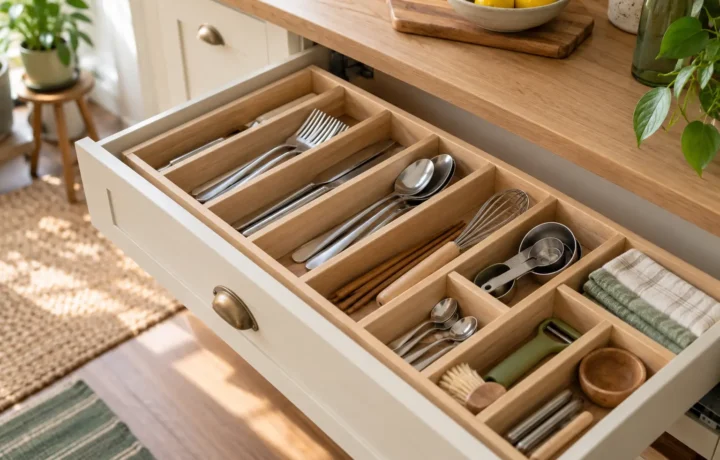
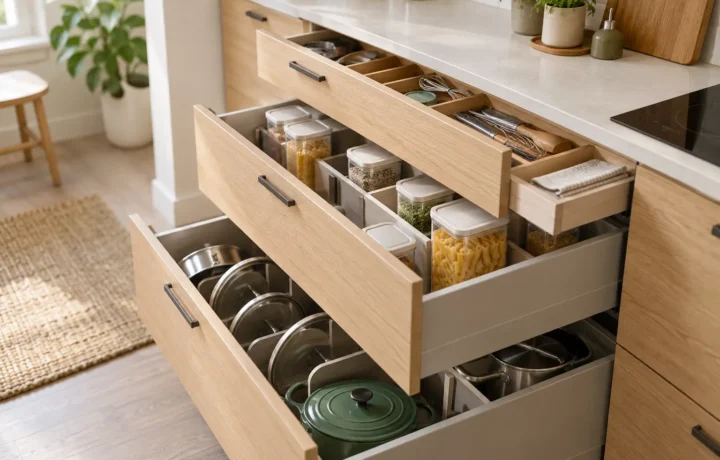
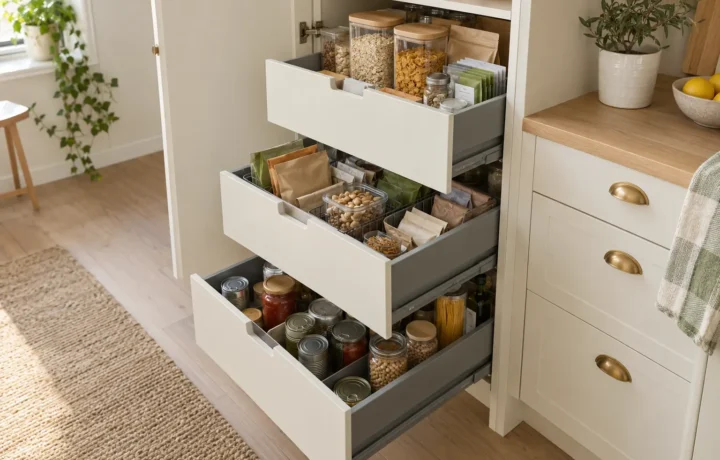
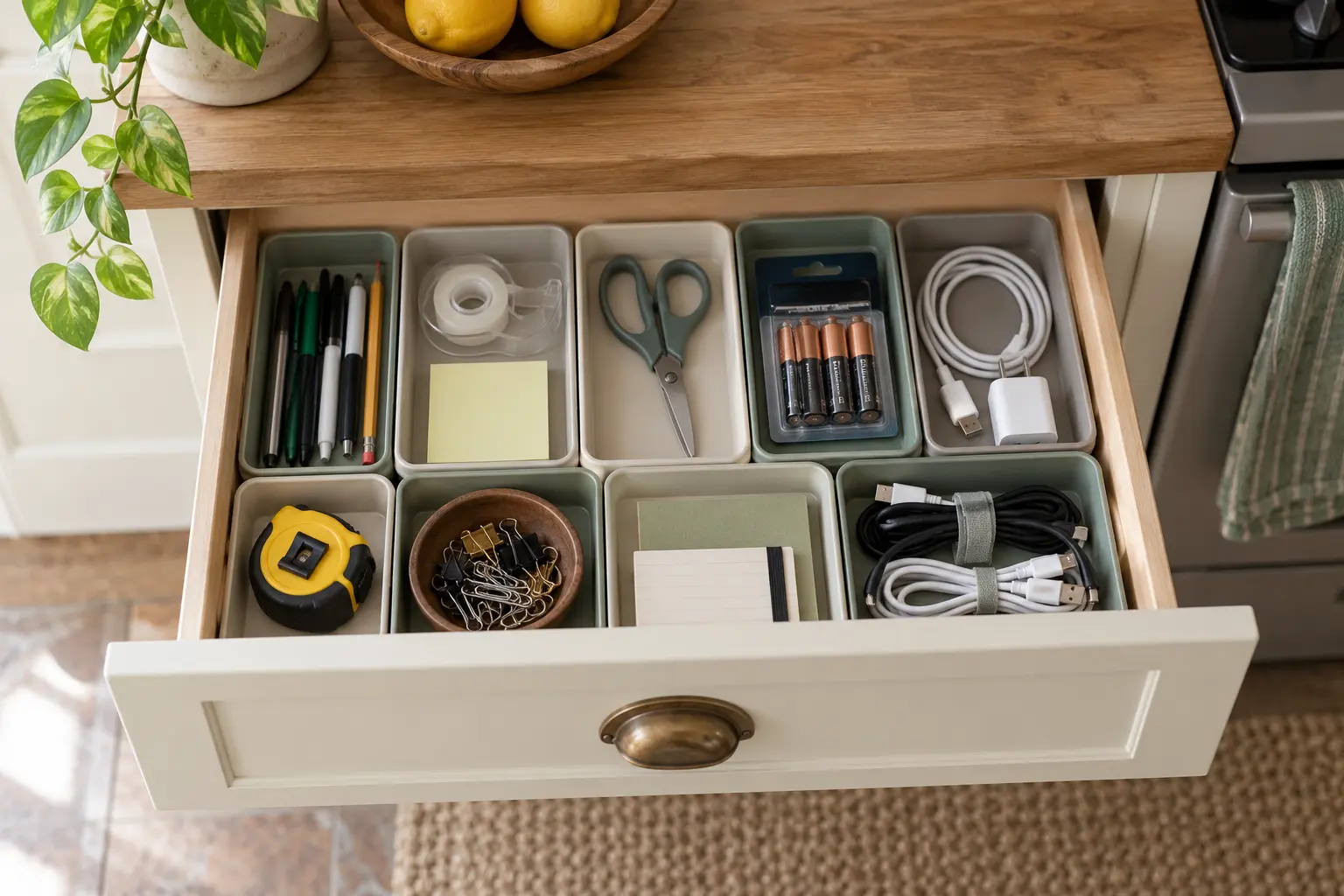
Editorial image note: the photographs in this guide are purpose-created illustrations of the organizing principles described. They are not presented as the author’s home, a client project or proof of a tested result.
In this guide
- 1. Define the drawer’s purpose
- 2. Empty the drawer safely
- 3. Make four decisions before buying trays
- 4. Measure the drawer and choose shallow organizers
- 5. Assign zones by function
- 6. Contain cables, batteries and sharp items
- 7. Set a visible capacity limit
- 8. Use a two-minute return routine
- Frequently asked questions
1. Define the drawer’s purpose
Write one sentence that describes what belongs: small shared household supplies used near the kitchen. This might include writing tools, tape, clips, a measuring tape and a small number of charging accessories. Exclude items that already have a safer or more logical home.
A junk drawer still needs rules
Mixed storage is not permission for unidentified objects. If nobody knows what a part belongs to, label and relocate it for a short decision period instead of returning it loose to the drawer.
2. Empty the drawer safely
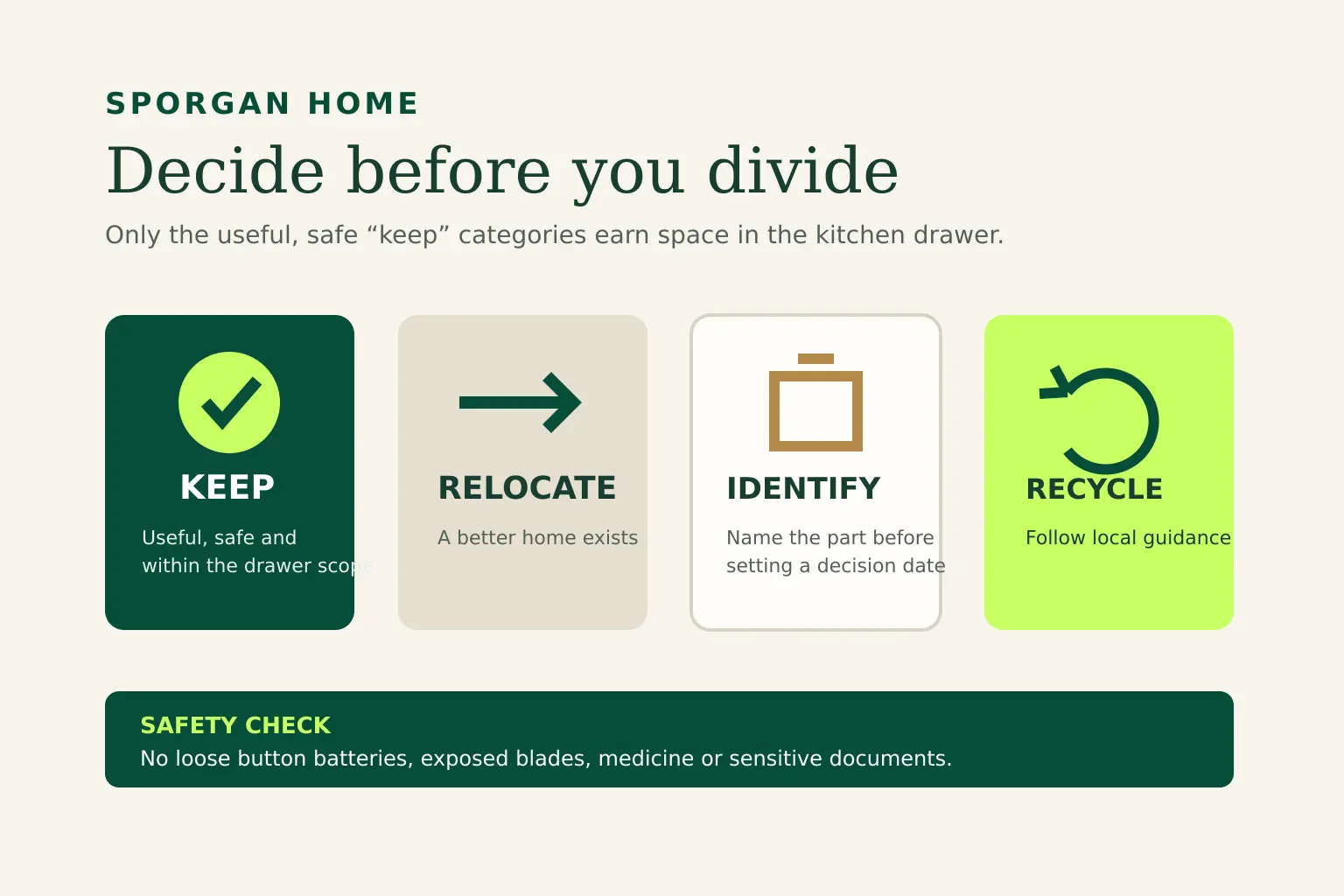
Remove items onto a clear surface and watch for sharp points, leaking batteries or broken objects. Do not handle damaged batteries or unknown substances as ordinary clutter; isolate the area and follow the product or local authority guidance. Keep children and pets away during the sort.
3. Make four decisions before buying trays
- Keep: useful, safe items that match the drawer purpose
- Relocate: objects with a better home elsewhere
- Repair or identify: parts connected to a known item
- Recycle or dispose: unwanted items using applicable local guidance
Remove old receipts after retaining any record your household genuinely needs. Move medicine, important documents, spare keys and items with personal information to appropriate secure storage. Return kitchen tools to their task zones.
4. Measure the drawer and choose shallow organizers
MEASURED PLANNING EXAMPLE
Give each drawer zone a job
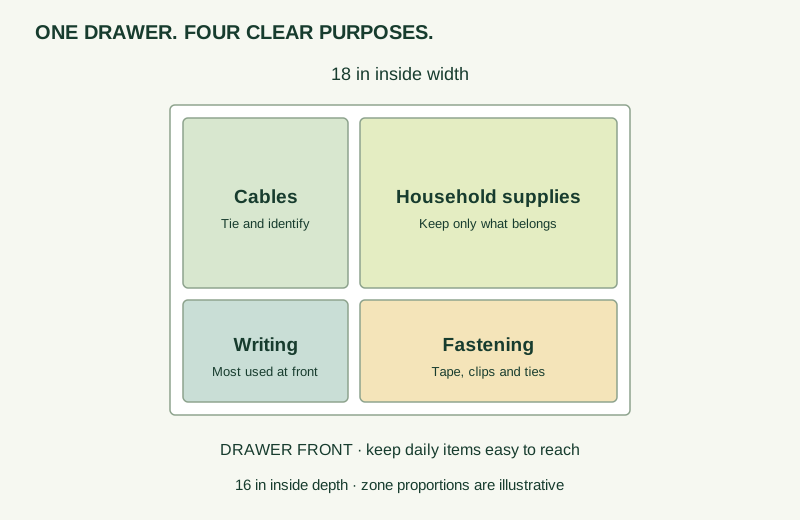
Keep frequently used items near the front. Leave enough clearance to close the drawer and lift out each organizer. A zone describes a purpose, not a required product.
Try an editable drawer example →Measure internal width, depth and usable height, including any taper or hardware. Arrange the kept categories on paper within those dimensions before purchasing trays. A combination of small low boxes often adapts better than one rigid organizer, provided it cannot jam the drawer.
If standard trays leave unusable gaps, the DIY drawer-divider guide explains how to plan a removable custom insert. Keep the layout lift-out and easy to clean.
5. Assign zones by function
Create one small zone for writing, one for fastening, one for cables and one for compact household tools only if those categories passed the keep decision. Place the most-used zone at the front. Keep similar small pieces inside a dish or lidded box so they do not migrate beneath larger objects.
Do not subdivide the drawer into dozens of tiny cells. Each category needs enough room for ordinary use but a firm boundary that prevents silent expansion.
6. Contain cables, batteries and sharp items
Tie each cable with a reusable strap and identify its device when that is not obvious. Store batteries only according to the manufacturer’s guidance, with terminals protected and away from metal objects; damaged or leaking batteries require appropriate handling. Avoid loose button batteries in an accessible drawer.
Keep blades, loose needles and other sharp items in purpose-made protected storage elsewhere. Scissors should close fully and have a stable compartment. A general household drawer should not become the default home for hazardous items.
7. Set a visible capacity limit
Let each tray define the maximum. When the pen compartment is full, test the pens and remove failures before adding more. When spare cables no longer fit their zone, identify and release the ones that do not support current devices. Do not add a second layer that hides the categories beneath it.
8. Use a two-minute return routine
During a regular kitchen reset, return obvious items to their zones and remove anything that entered the drawer without a decision. Wipe trays as needed and repeat the full sort when categories stop fitting. The maintenance rule is simple: every item must match the drawer purpose and fit inside its assigned limit.
If the kitchen has no spare drawer, use one portable lidded household box outside the food-preparation zone. The small-kitchen organization guide can help identify an accessible location without sacrificing an essential cooking drawer.
Frequently asked questions
What belongs in a kitchen junk drawer?
Keep a limited set of safe, frequently used household supplies that need a shared kitchen-adjacent home, such as pens, tape, clips, tied cables and a small measuring tool.
What should not go in a junk drawer?
Avoid medicine, sensitive documents, unidentified keys, loose button batteries, damaged batteries, unprotected blades and objects that already have a safer task-specific home.
How do I keep a junk drawer organized?
Give the drawer a clear purpose, assign shallow zones, let each compartment set a capacity limit and remove undecided items during a short regular reset.
What can I use instead of a junk drawer?
Use a portable lidded household-supplies box in an accessible non-food area, with the same category zones and safety rules.