- Best for
- Small cabinets with mixed mug sizes
- Approach
- Edit the collection and create two access levels
- Start here
- Measure shelf width, depth and mug height
Learning how to organize coffee mugs in a cabinet starts with the handles, because they interrupt neat rows and the cup heights rarely match. A small cabinet works better when the collection is edited, the shelf is measured and daily mugs are separated from occasional or sentimental pieces.
This guide focuses on the mug cabinet, not the whole beverage setup. Use the small-kitchen coffee-station guide to place the machine and supplies, or return to the small-kitchen organization plan if another cabinet is a better home for the collection.
Editorial image note: the photographs in this guide are purpose-created illustrations of the organizing principles described. They are not presented as the author’s home, a client project or proof of a tested result.
In this guide
- 1. Edit the mug collection
- 2. Measure the cabinet and the mugs
- 3. Give daily mugs the easiest reach
- 4. Add a measured second level
- 5. Protect tall and special mugs
- 6. Separate travel cups and loose parts
- 7. Connect the cabinet to the coffee routine
- 8. Reset the mug cabinet as the collection changes
- Frequently asked questions
1. Edit the mug collection
Bring every mug together and separate daily cups, guest mugs, travel cups and sentimental pieces. Remove chipped items and cups that are uncomfortable to hold or no longer used. A cabinet should not lose its easiest space to a promotional mug nobody chooses.
Decide how many clean mugs the household actually needs between normal washes. Keep a reasonable working set in the kitchen and give display-only or archival pieces a different protected location.
2. Measure the cabinet and the mugs
MEASURED PLANNING EXAMPLE
Check height, handles and the shelf opening
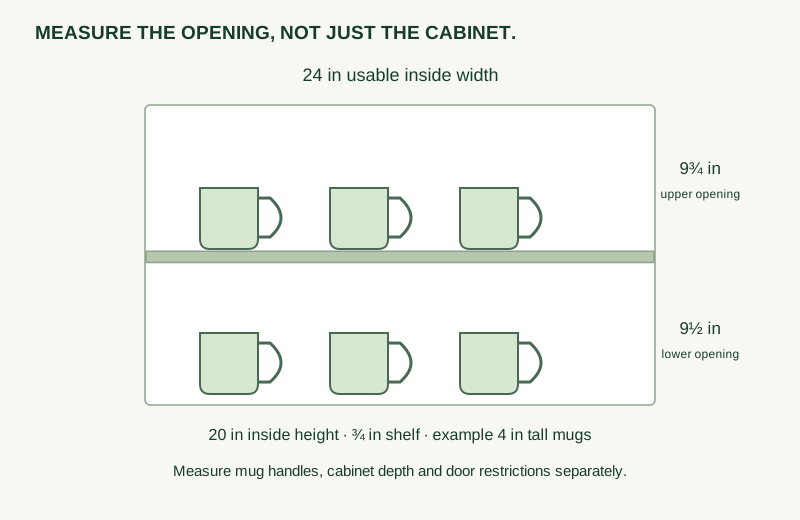
Measure your widest mug including its handle. Compare mug height with the usable opening above each shelf, and leave room to lift it out. The fit checker models bins, so enter a tray or basket containing mugs rather than treating individual mugs as rectangular bins.
Check a mug basket or tray →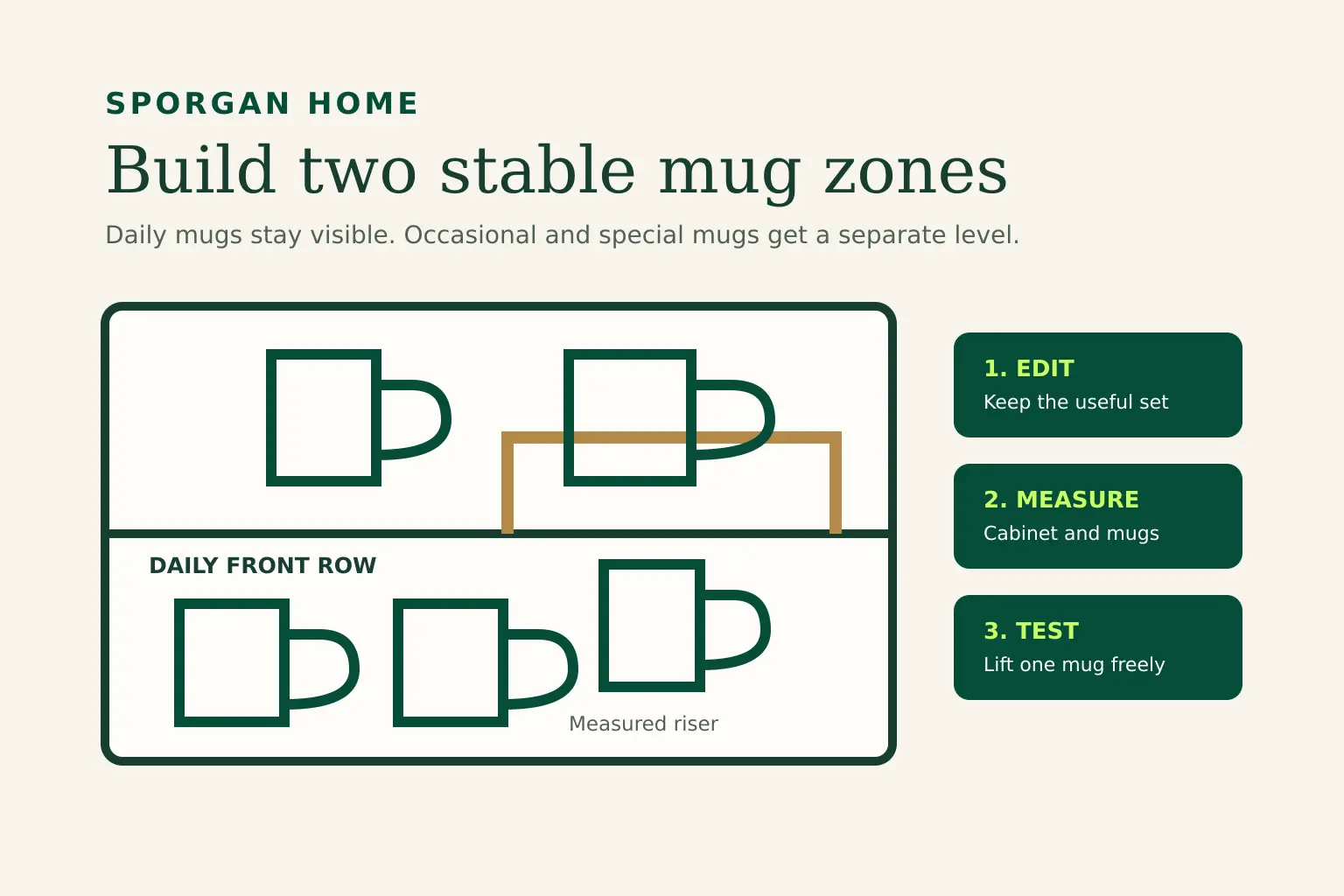
Measure usable shelf width, depth and height with the door closed. Include hinge arms, shelf pins and the space needed to grasp a handle. Then measure the tallest daily mug and the widest handle. A riser that fits the cabinet may still be wrong for the cup beneath it.
Sketch the shelf as two simple rectangles: the front row you can reach directly and the back or upper zone that requires one extra movement. Count how many mugs fit without handles interlocking. Leave a little breathing room so one cup can be lifted without knocking the next. This practical capacity is more useful than the cabinet’s total volume.
3. Give daily mugs the easiest reach
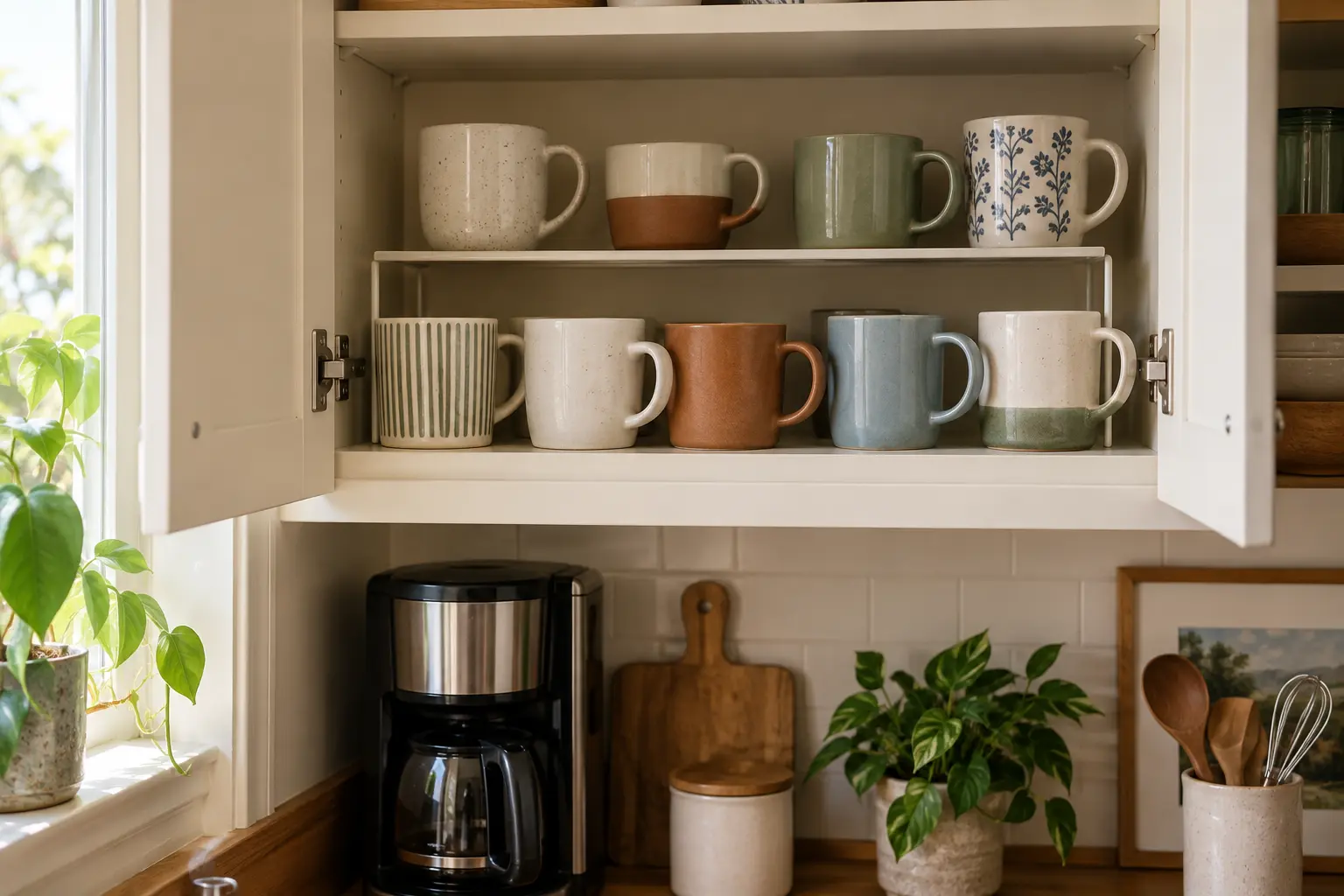
Place the everyday set in one visible row near the cabinet front and close to the coffee-making zone. Turn handles consistently only if that makes grasping easier and does not crowd neighboring cups. Avoid nesting or stacking mugs that were not designed to sit securely together.
If several people use different cups, group the daily set by person or size only when everyone can still see their choice. The system should shorten the morning routine, not create a display rule that makes cups awkward to return. A small open gap is useful because it absorbs the mug that is currently in the dishwasher.
Stable beats tightly packed
Leave enough room to lift one mug without knocking another handle. A few unused centimetres are more valuable than a shelf that must be unpacked every morning.
4. Add a measured second level
A removable shelf riser can use empty vertical space when it is stable, fits the cabinet and leaves safe clearance above and below. Put shorter or less-used mugs on the upper level only when they remain easy to remove. Follow the riser’s load and placement instructions.
Do not install adhesive or screw-in hooks on rental cabinetry without permission. Hanging systems also need adequate clearance and secure attachment; a freestanding riser is often easier to inspect, clean and move.
5. Protect tall and special mugs
Give unusually tall, wide or delicate mugs a stable single position rather than forcing them into the daily row. Keep heavy items on a secure shelf and avoid placing a fragile mug where another item must pass over it. If the special collection is larger than the cabinet, display or store only a rotating selection.
6. Separate travel cups and loose parts
Travel cups, lids and straws behave differently from ceramic mugs. Store them together in a separate upright zone or bin so loose pieces do not migrate through the cup cabinet. Confirm that every vessel is clean and dry before closing it in storage.
A corner cabinet can hold occasional drinkware only when items remain visible and accessible. See the corner-cabinet guide before moving cups into a deep blind space.
7. Connect the cabinet to the coffee routine
Keep mugs near the machine only if that cabinet does not conflict with food preparation, dish storage or appliance clearance. Store coffee, filters and small accessories in one neighboring container rather than filling the mug shelf with packets. The small-appliance storage guide can help when the machine itself overwhelms the counter.
8. Reset the mug cabinet as the collection changes
Return mugs to their assigned level, remove cups that repeatedly migrate elsewhere and wipe the shelf according to its finish. Recheck the layout after a new mug arrives. The cabinet capacity, rather than an extra stack, should set the collection limit.
Frequently asked questions
What is the best way to organize mugs in a cabinet?
Keep an edited daily set in a visible front row, measure any shelf riser for both the cabinet and mugs, and store occasional or unusual cups in a separate stable zone.
Is it safe to stack coffee mugs?
Stack only mugs designed to nest securely and only within their manufacturer’s guidance. Unlike shapes and offset handles can create an unstable stack.
Can I hang mugs under a cabinet shelf?
Use a hanging system only when the cabinet, attachment method, clearance and product instructions support it. Renters should obtain permission before fastening or adding adhesive to cabinetry.
How many mugs should I keep in a small kitchen?
Keep the number your household and normal guest routine use between washes, plus only the special pieces you can store safely. Let the cabinet’s usable capacity set the final limit.