- Best for
- Pantry bins, cabinets and frequently refilled containers
- Approach
- Label locations and categories before decorating them
- Start here
- List the items your household actually stores
Printable kitchen labels can reduce searching and make restocking easier, but more labels do not automatically create a more organized kitchen. The useful question is whether a label helps people identify, return or replenish something that would otherwise be unclear.
This guide includes a genuine downloadable label pack and a process for adapting it to cabinets, pantry bins and food containers. Use it after establishing zones with the small-pantry guide or the broader small-kitchen organization plan.
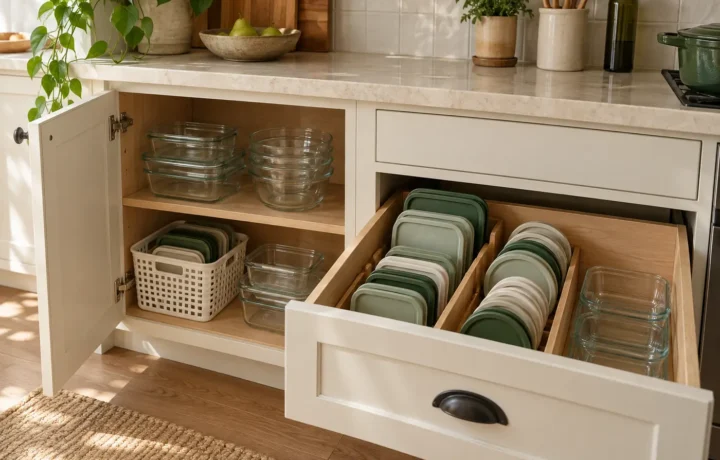
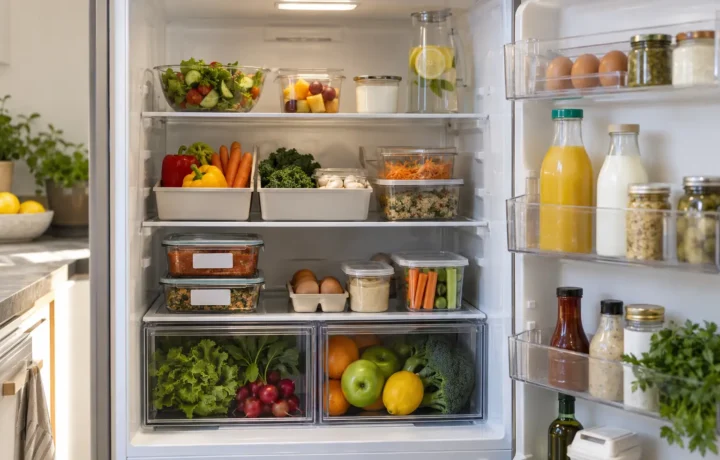
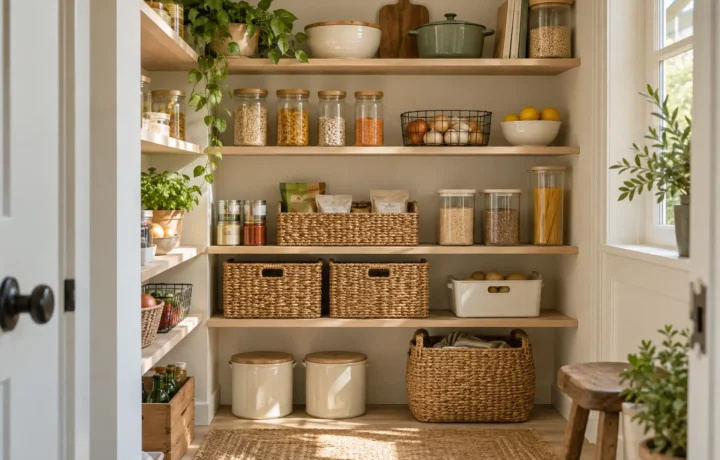
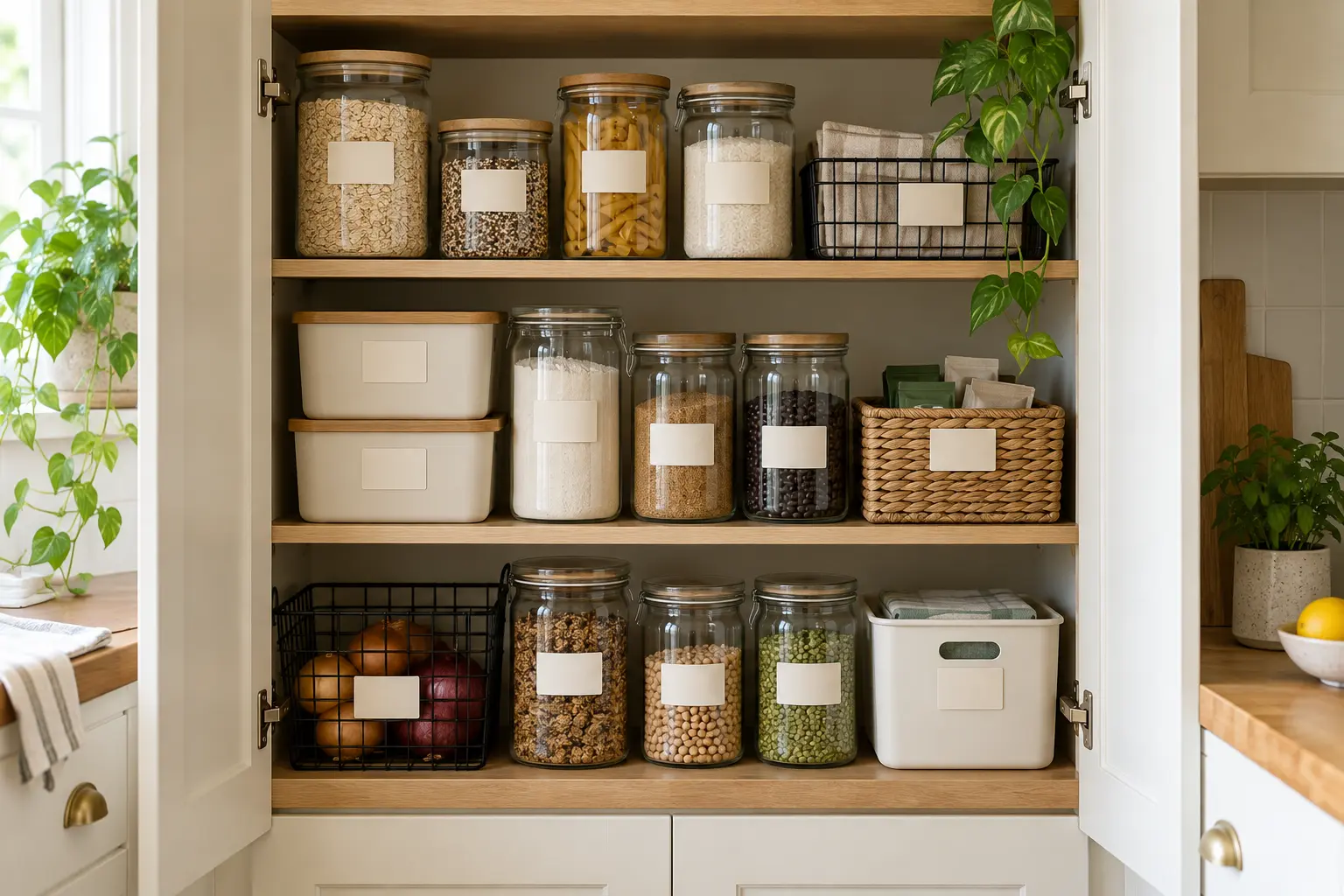
Editorial image note: the photographs in this guide are purpose-created illustrations of the organizing principles described. They are not presented as the author’s home, a client project or proof of a tested result.
In this guide
- 1. Decide what genuinely needs a label
- 2. Match the label material to the surface
- 3. Download the printable kitchen-label pack
- 4. Print and cut a small test set
- 5. Label by category before individual product
- 6. Preserve important food information
- 7. Keep cabinet labels renter-friendly
- 8. Review labels during restocking
- Frequently asked questions
1. Decide what genuinely needs a label
Label a category when several people need to return changing items to the same place, such as snacks, baking supplies or lunch containers. Use a specific item name when a decanted ingredient could be confused with another. Leave an obvious open shelf unlabeled if the wording adds no useful information.
- Category bins with changing packaged contents
- Opaque containers whose contents are not visible
- Similar decanted ingredients that must be distinguished
- High or deep cabinets where a front label improves scanning
- Shared household zones that need a clear return point
2. Match the label material to the surface
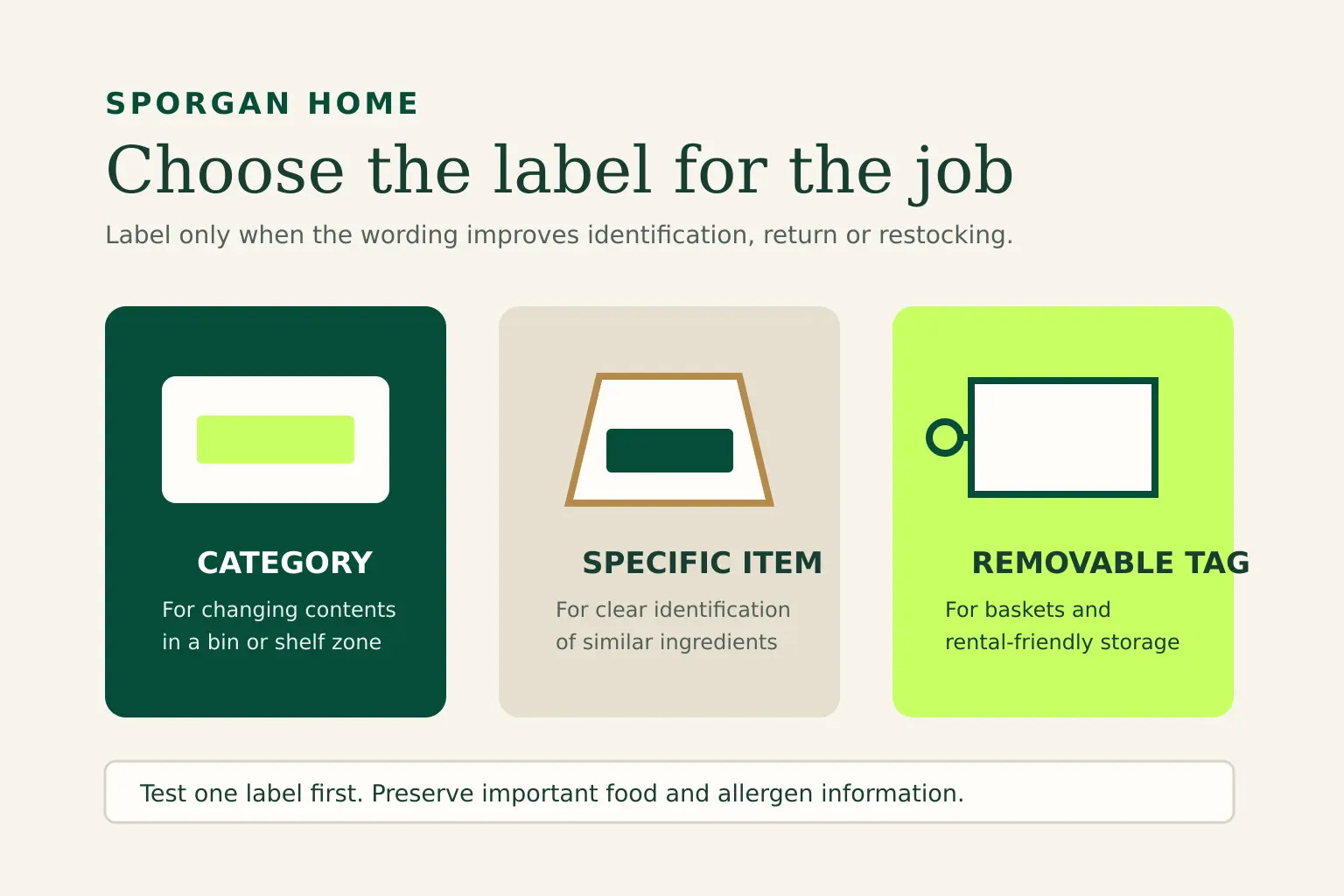
Paper labels suit dry, stable surfaces. Removable adhesive labels can work on compatible smooth containers. Card tags or clip-on labels avoid adhesive on baskets and rental cabinetry. A shelf-edge card can identify a zone without marking the cabinet itself.
Test one label first
Check the label and removal method on an inconspicuous compatible area. Moisture, grease, texture, sunlight and time can change how paper, ink and adhesive behave.
3. Download the printable kitchen-label pack
The Sporgan Home pack contains common pantry names, flexible household categories and blank labels for your own wording. Print only the pages you need. The labels are intentionally simple so they remain readable in a small cabinet and can be replaced when a category changes.
Sporgan Home printable kitchen labels
PDF, three US Letter pages. Print at actual size and use only with materials compatible with your printer and storage surface.
4. Print and cut a small test set
Check printer and label-paper instructions, select actual size unless your chosen stock requires another setting and print one ordinary-paper test page. Compare the test to the container or tag before using adhesive material. Cut with the method recommended for the paper and keep sharp tools stored safely.
Use dark, high-contrast printing and keep the wording short. A decorative script may be harder to scan on a high shelf. If handwriting the blank labels, use an ink suited to the label material and allow it to dry before application.
5. Label by category before individual product
A pantry bin labeled “Breakfast” can accept changing cereal, oats and toppings, while a jar holding a decanted ingredient needs its actual name. Category labels make flexible storage easier; specific labels protect identification. Do not use a broad decorative label where the contents could be mistaken for another food.
For drawers, place the label where it is visible when the drawer opens. For baskets, attach a tag to a stable front edge. Our pantry-drawer guide explains how to keep categories visible without decanting everything.
6. Preserve important food information
When transferring food from original packaging, retain any information your household needs, such as the product identity, preparation directions, allergen information, lot details or date. A decorative name alone may not be enough. Follow applicable food-storage guidance and the manufacturer’s instructions.
Do not mix a new refill into an unidentified remainder. Clean and dry the container as appropriate, confirm the contents and update any date or note your household relies on. The food-storage-container guide covers a separate system for matching empty containers and lids.
7. Keep cabinet labels renter-friendly
Avoid applying adhesive directly to painted or finished cabinetry unless the property owner permits it and the material is compatible. Use removable tags on baskets, cards inside shelves or labels on your own containers. Keep the original surface clean and follow the label manufacturer’s removal instructions.
In a kitchen without a pantry, label the portable containers and baskets rather than turning every cabinet into a permanent directory. See the no-pantry kitchen guide for a storage-zone plan that can move with you.
8. Review labels during restocking
Remove a label when the category no longer exists, replace wording that causes repeated mistakes and avoid layering new labels over outdated ones. Keep a few blank labels with a pen near the storage zone so the system can change without a full redesign.
A good label system becomes quieter over time. People know where to return things, containers remain identifiable and the wording changes only when the storage decision changes.
Frequently asked questions
What should I put on kitchen labels?
Use a category name for changing groups such as snacks or baking supplies, and a specific item name where the contents must be identified accurately.
Can I use printable labels on rental cabinets?
Avoid direct adhesive unless the lease or owner permits it and the label is compatible with the finish. Tags, shelf cards and labels on your own containers are safer reversible options.
What paper should I use for printable pantry labels?
Use stock approved for your printer and suitable for the intended dry or wipeable surface. Test one label first and follow the paper, printer and container guidance.
Should I label clear containers?
Label clear containers when similar ingredients could be confused or when important identifying information would otherwise be lost. Obvious items do not need labels merely for decoration.