- Best for
- Compact kitchens with crowded counters
- Approach
- Store by frequency and full-use route
- Start here
- Measure appliances, doors and cord path
Small kitchen appliances compete for the same limited counter area needed for preparation, serving and cleanup. Moving everything into a cabinet can make the counter look calmer, but it can also create awkward lifting, tangled accessories and tools that are never used. The right storage location depends on the appliance, the person using it and the complete routine.
This guide focuses on storage rather than appliance recommendations. It extends the small-kitchen organization plan by helping each appliance earn an accessible, measured home. If one daily beverage routine deserves a permanent counter zone, see our small-kitchen coffee station guide.
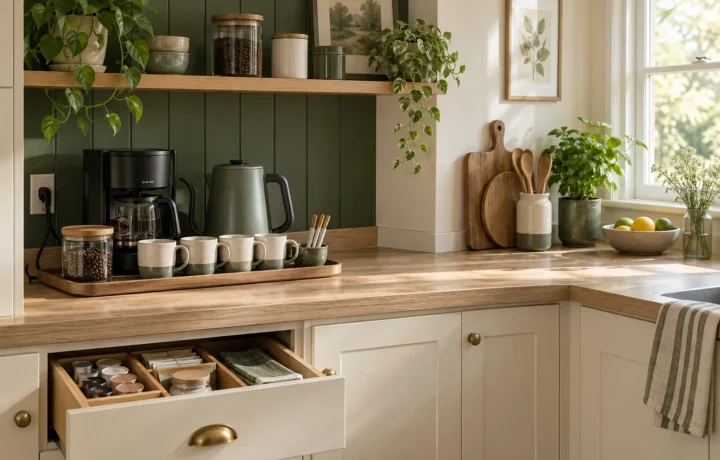
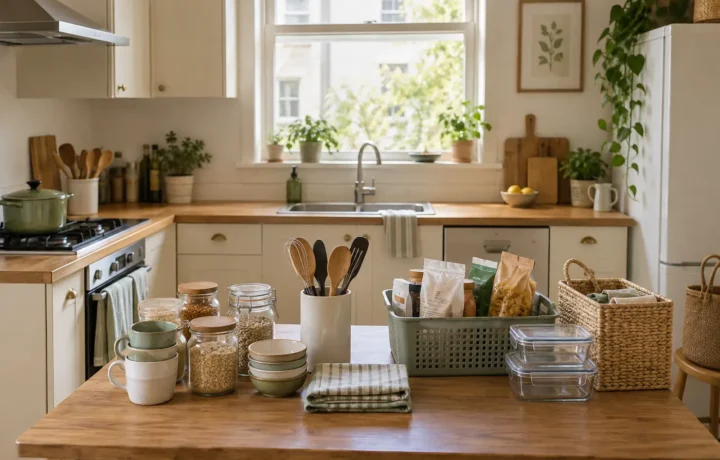
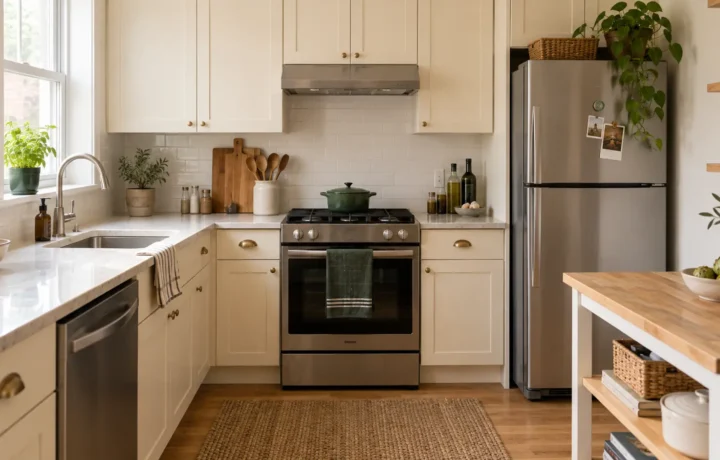
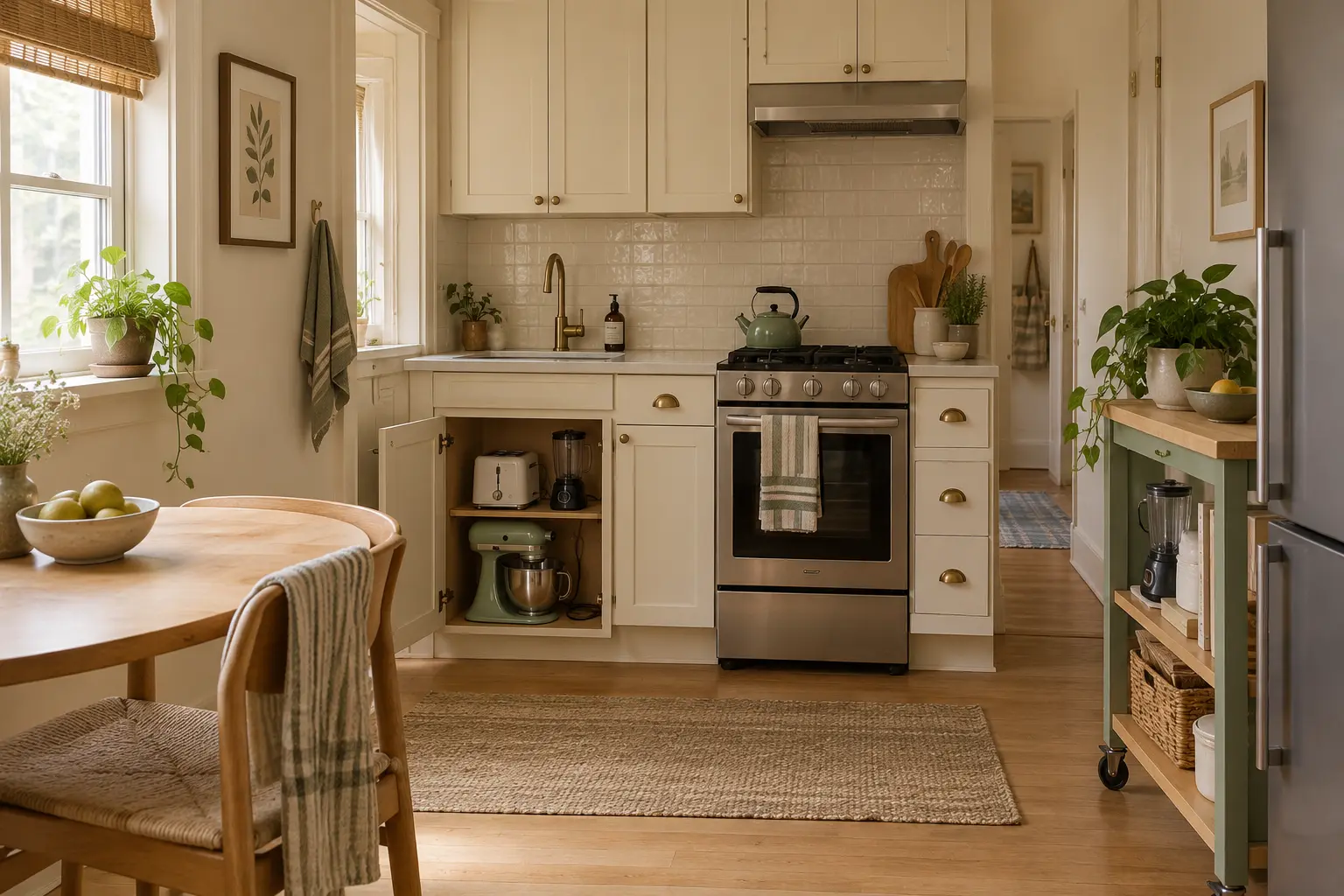
Editorial image note: the photographs in this guide are purpose-created illustrations of the organizing principles described. They are not presented as the author’s home, a client project or proof of a tested result.
In this guide
- 1. Inventory appliances, parts and actual use
- 2. Measure the appliance and its route
- 3. Match storage to frequency
- 4. Keep heavier appliances low and supported
- 5. Store attachments with the appliance
- 6. Define which appliances may stay on the counter
- 7. Use a cart only when it has a parking place
- 8. Review the appliance home after four weeks
- Frequently asked questions
1. Inventory appliances, parts and actual use
List every countertop appliance and its attachments, then note how often it was used during an ordinary month. Keep manufacturer instructions with the appliance or in an accessible digital record. Remove broken items through an appropriate recycling or disposal route and question duplicates that perform the same task.
Count the whole appliance
Include bowls, blades, lids, paddles, trays and charging pieces. An appliance does not have a working home when its essential attachment is stored where nobody can find it.
2. Measure the appliance and its route
Record the maximum width, depth and height, including handles and lids. Measure the cabinet opening rather than assuming the internal shelf dimension is enough. Check the door swing, shelf edge and the clear space needed for hands. For operation, confirm the appliance has the ventilation, water clearance, stable surface and electrical arrangement required by its manufacturer.
- Maximum appliance dimensions
- Weight with its usual bowl or tank
- Cabinet or cart opening
- Shelf rating or condition
- Lift and carry route
- Safe operating and cooling location
3. Match storage to frequency
An appliance used every day may deserve a permanent counter position if it does not block the main work zone. A weekly tool can live in an easy lower cabinet or stable cart. An occasional appliance can move farther from the preparation area, but it should still be reachable without unsafe climbing or lifting.
Frequency is personal. Do not copy a counter layout designed around someone else’s breakfast routine. The best location reduces the effort of the tasks your household actually repeats.
4. Keep heavier appliances low and supported
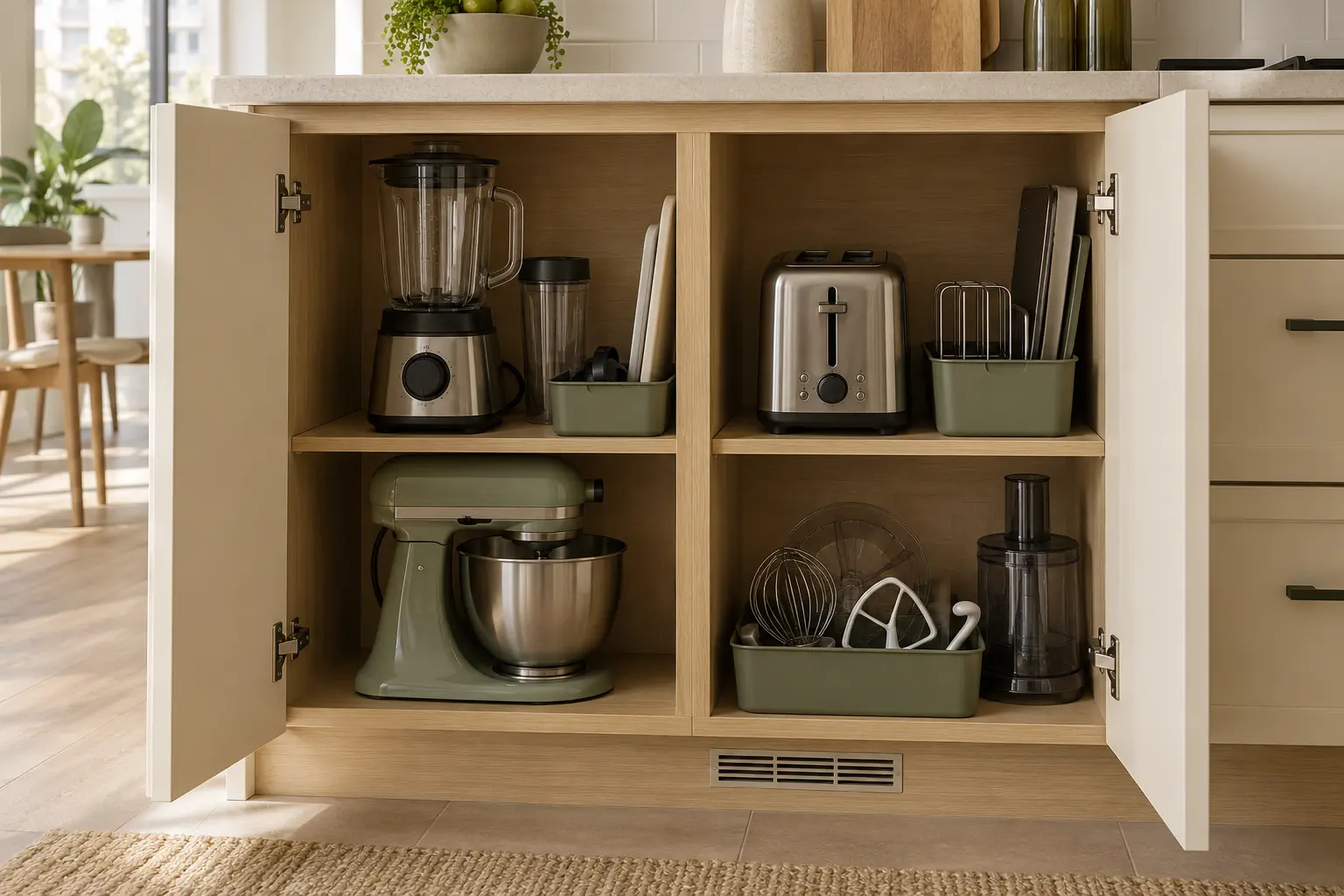
A stable lower shelf can suit a mixer, processor or other heavier appliance when the structure supports it and the user can lift it comfortably. Keep the route clear and use two hands when the manufacturer instructs. Avoid storing a heavy item above shoulder height or behind several other objects.
Pull-out shelves or appliance lifts should be correctly specified and installed for the load. A convenient mechanism is not a reason to exceed cabinet or hardware limits.
5. Store attachments with the appliance
Use a shallow bin or fitted drawer section for the parts belonging to one appliance. Protect sharp attachments as directed and keep small pieces from falling behind the machine. Label the bin only when the contents are not obvious from a glance.
Do not wind a cord tightly around a hot or damp appliance. Let equipment cool, empty and dry as its instructions require, then store the cord without pinching it in a door or stressing the connection.
6. Define which appliances may stay on the counter
Mark the preparation area that must remain empty, then assign a separate appliance edge or corner. Keep appliances away from unsafe proximity to water or heat and preserve required ventilation. If the counter cannot support both the machine and a clear work surface, the appliance needs another home or a more deliberate routine.
A shallow tray can visually contain a small daily group, but it must not make the group harder to clean around or encourage unrelated items to gather. One defined coffee routine is covered in our compact coffee-station plan.
7. Use a cart only when it has a parking place
A slim cart can add flexible appliance storage when it fits the room without narrowing a doorway, walkway or cabinet opening. Measure the cart with handles and wheels, confirm its load limits and lock casters when provided and appropriate. Store heavier items low to improve stability.
The cart is storage, not automatically an operating surface. Use an appliance on it only when the cart and appliance instructions allow, the surface is stable and the electrical and ventilation setup is safe.
8. Review the appliance home after four weeks
Notice which machine stays out because returning it is too difficult, which attachment goes missing and which appliance was not used. Change the location before buying a new cabinet organizer. If an appliance consistently fails to justify the space, decide whether it belongs elsewhere or should leave the kitchen.
- Can the appliance be reached safely?
- Do all parts return together?
- Is the operating surface available?
- Does the unit cool and dry before storage?
- Is the counter still useful for preparation?
Frequently asked questions
Where should I store small kitchen appliances?
Keep daily appliances in a safe counter zone when space allows, weekly appliances in accessible supported storage and occasional tools farther away. Base the location on measurements, weight and the full route to use.
Can small appliances be stored in a lower cabinet?
Yes when the shelf and opening support the appliance and the user can lift it safely. Keep heavy items low, preserve door clearance and follow the appliance instructions.
Can I operate an appliance inside a cabinet?
Do so only when the cabinet system and appliance are specifically intended for that use and all manufacturer requirements are met. Otherwise move it to a stable, ventilated operating surface.
How do I keep appliance cords organized?
Allow the appliance to cool and dry, then store the cord according to its instructions without sharp bends, tight wrapping, pinching or tension at the connection.