- Best for
- Rental cabinets and drawers needing an easy-clean layer
- Approach
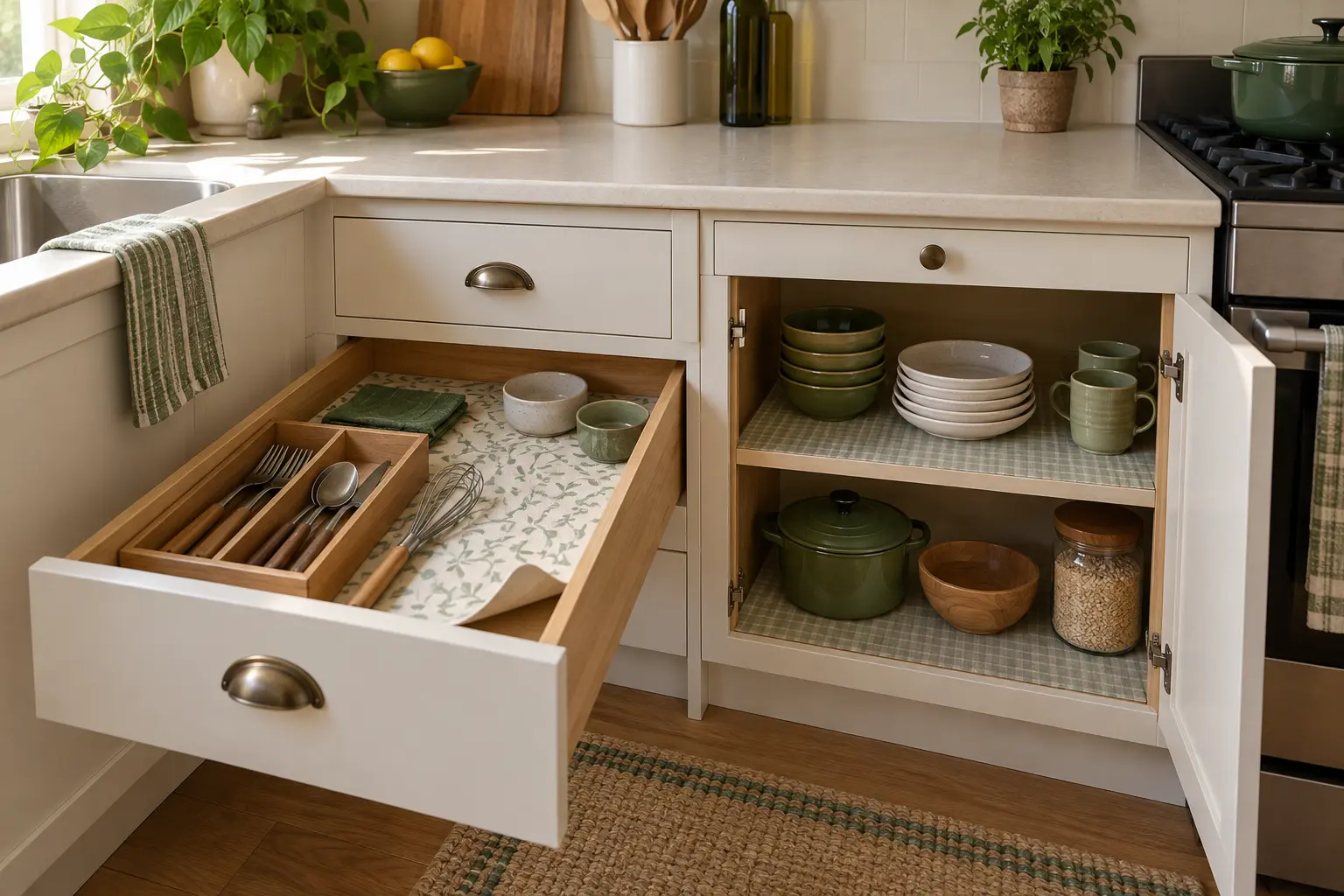
- Choose a liner for the surface and routine
- Start here
- Measure each shelf, drawer and obstruction
Lining kitchen shelves can make crumbs easier to collect, add light grip or separate stored items from an older cabinet finish. It can also trap moisture, curl under drawers or create an adhesive problem that was not there before. The useful question is not whether every kitchen needs liner, but which surfaces have a clear reason for it.
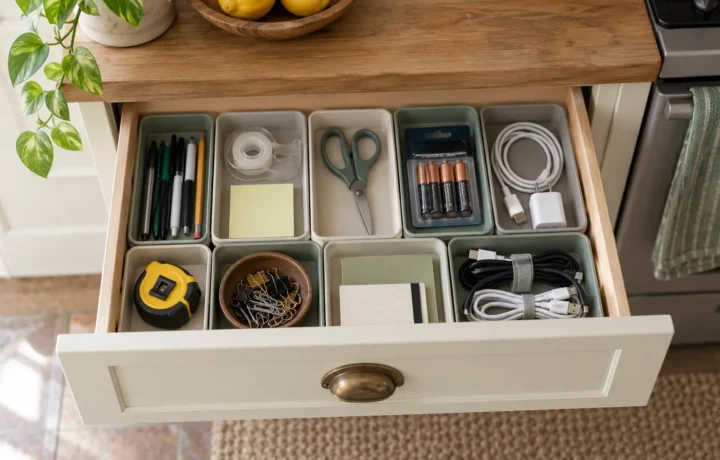
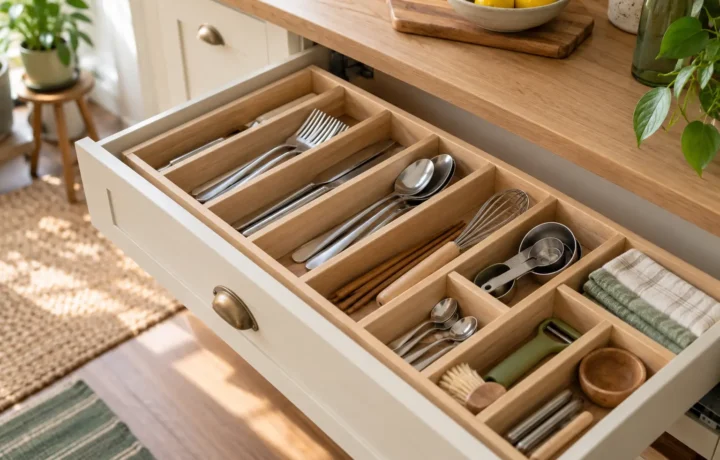
This rental-friendly guide explains selection, measurement, fitting and maintenance. If you are still deciding whether a liner is necessary, begin with should you line kitchen cabinets?. For the layout inside the drawer itself, use our small kitchen drawer organization guide.
Editorial image note: the photographs in this guide are purpose-created illustrations of the organizing principles described. They are not presented as the author’s home, a client project or proof of a tested result.
In this guide
- 1. Give each lined surface a purpose
- 2. Check the rental and surface rules
- 3. Match the material to the contents
- 4. Measure every shelf and drawer separately
- 5. Cut for a flat, removable fit
- 6. Place the liner without trapping a problem
- 7. Clean both the liner and the hidden surface
- 8. Remove and reassess before move-out
- Frequently asked questions
1. Give each lined surface a purpose
List the problem the liner should solve: crumbs in a pantry drawer, sliding utensils, a rough but sound shelf or an easy-to-lift cleaning layer. Do not line a cabinet merely because the empty surface looks unfinished. If there is dampness, odour, pest activity, peeling material or structural damage, notify the property owner and address the cause instead of covering it.
A liner is not a repair
It cannot make a wet, mouldy, unstable or contaminated cabinet safe. Keep damaged surfaces visible until the underlying issue is assessed and resolved.
2. Check the rental and surface rules
Review the lease before using adhesive products. When permission is uncertain, choose a non-adhesive liner that lifts out without residue and test it with the intended objects. Even a non-adhesive material can react with some finishes during long contact, so follow the liner and cabinet guidance.
Avoid fastening through the cabinet or adding glue, tape or caulk without written approval. Record the original surface condition before covering it, particularly in an older rental.
3. Match the material to the contents
Smooth washable liner can suit dry pantry shelves, while a lightly textured non-slip liner may help stable items resist movement in a drawer. Open-weave material allows some air movement but can catch crumbs and may not support small objects. Paper is easy to cut but may not suit damp or frequently wiped zones.
- Dry-food shelf: easy to lift and wipe
- Utensil drawer: thin enough for full clearance
- Dish shelf: stable under the expected weight
- Under sink: removable and easy to inspect beneath
- Older finish: compatible with prolonged contact
4. Measure every shelf and drawer separately
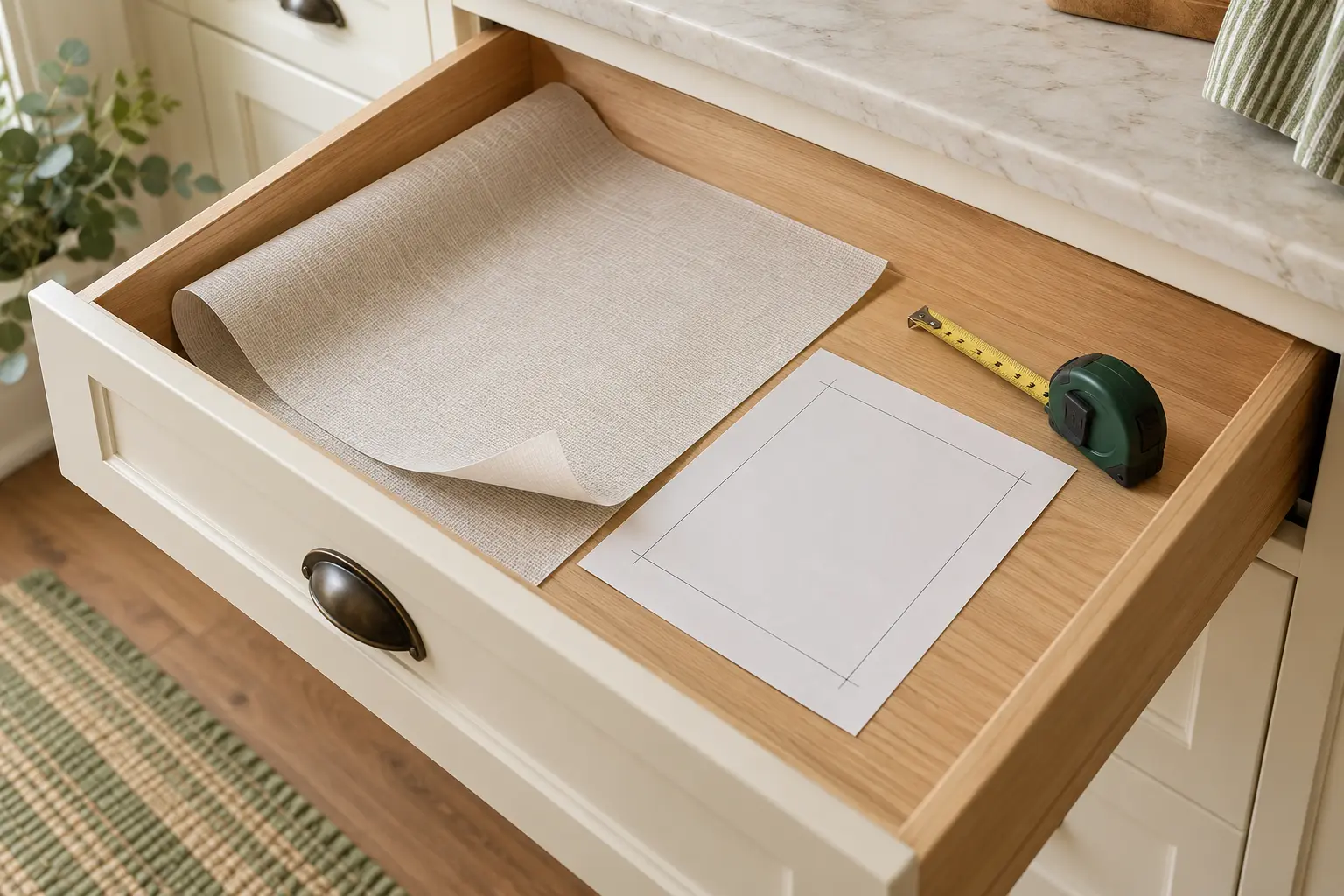
Cabinet interiors that appear identical can vary around hinges, rails and back corners. Measure the usable width and depth at more than one point. For an irregular shape, make a paper template, mark its orientation and test it flat before transferring the outline to the liner.
Keep liner clear of drawer slides, ventilation openings and moving hardware. Check the full opening and closing path with the intended contents in place.
5. Cut for a flat, removable fit
Use the manufacturer’s cutting guidance on a protected surface. Start slightly generous only when the material can be trimmed cleanly, then test the fit without forcing the corners. A small deliberate margin can make lifting and cleaning easier, while an oversized piece may buckle.
Round or relieve corners only when that helps the material lie flat. Do not wedge liner under fixed hardware. For repeat cabinets, keep the successful paper template rather than assuming the next shelf is identical.
6. Place the liner without trapping a problem
Empty and clean the surface with a compatible method, then let it dry fully. Lay non-adhesive liner from one edge and smooth it without stretching. If the material will not stay flat, reassess the fit and product rather than adding unapproved adhesive.
Return items gradually and watch whether weight, heat or frequent movement causes curling. Preserve any air gaps, drainage paths or access points designed into the cabinet.
7. Clean both the liner and the hidden surface
Lift removable liner on a routine suited to the cabinet and check beneath it. Clean and dry both layers according to their instructions before replacing the liner. An easy-clean top surface should not make the cabinet below invisible for years.
Replace liner that remains curled, cracked, sticky, stained or difficult to clean. Reconsider the material if moisture repeatedly appears underneath; the answer may be better ventilation or an underlying repair rather than another sheet.
8. Remove and reassess before move-out
Lift the liner slowly and inspect the finish well before the final move-out day. Follow approved surface guidance for any dust or residue and avoid harsh scrapers or solvents. Compare the condition with the photos taken before installation.
Keep only templates that fit a future use; cabinet dimensions rarely transfer perfectly between homes. The value of a rental liner is its service in this cabinet, not the amount of material retained.
Frequently asked questions
Should I line kitchen shelves in a rental?
Line a sound, dry surface only when the liner solves a specific cleaning, grip or separation need and the lease and product guidance permit it. A non-adhesive removable option is often easier to reverse.
How do I keep non-adhesive shelf liner from moving?
Cut an accurate flat fit, choose a material suited to the stored items and distribute objects normally. If it still shifts, change the material rather than adding unapproved adhesive.
Do I need to line every cabinet?
No. Use liner only where it provides a clear benefit. Leaving a clean, sound shelf uncovered can be simpler to inspect and maintain.
How often should shelf liner be cleaned?
Lift and clean it whenever spills, crumbs or moisture appear and include an inspection beneath it in the room’s regular deep-clean routine. Follow material-specific washing and drying instructions.