- Best for
- Sheet pans, tins, racks and cutting boards
- Approach
- Choose vertical or horizontal storage by fit
- Start here
- Collect the full bakeware category
Baking pans become difficult to store when flat pieces, deep tins, cooling racks and specialty shapes are treated as one stack. The item needed most is often underneath everything else, while narrow pieces slide against the cabinet door.
This baking pan organization guide builds a stable system around the cabinet or drawer you already have. It connects to the broader small-kitchen organization guide but keeps the focus on bakeware.
Editorial image note: the photographs in this guide are purpose-created illustrations of the organizing principles described. They are not presented as the author’s home, a client project or proof of a tested result.
In this guide
- 1. Collect the complete bakeware category
- 2. Edit duplicates and specialty shapes
- 3. Measure the largest piece and the cabinet opening
- 4. Choose vertical or horizontal storage
- 5. Create stable vertical lanes
- 6. Group flat pieces by function
- 7. Protect finishes without hiding pieces
- 8. Give awkward pans a separate decision
- 9. Reset the zone after baking
- Frequently asked questions
1. Collect the complete bakeware category
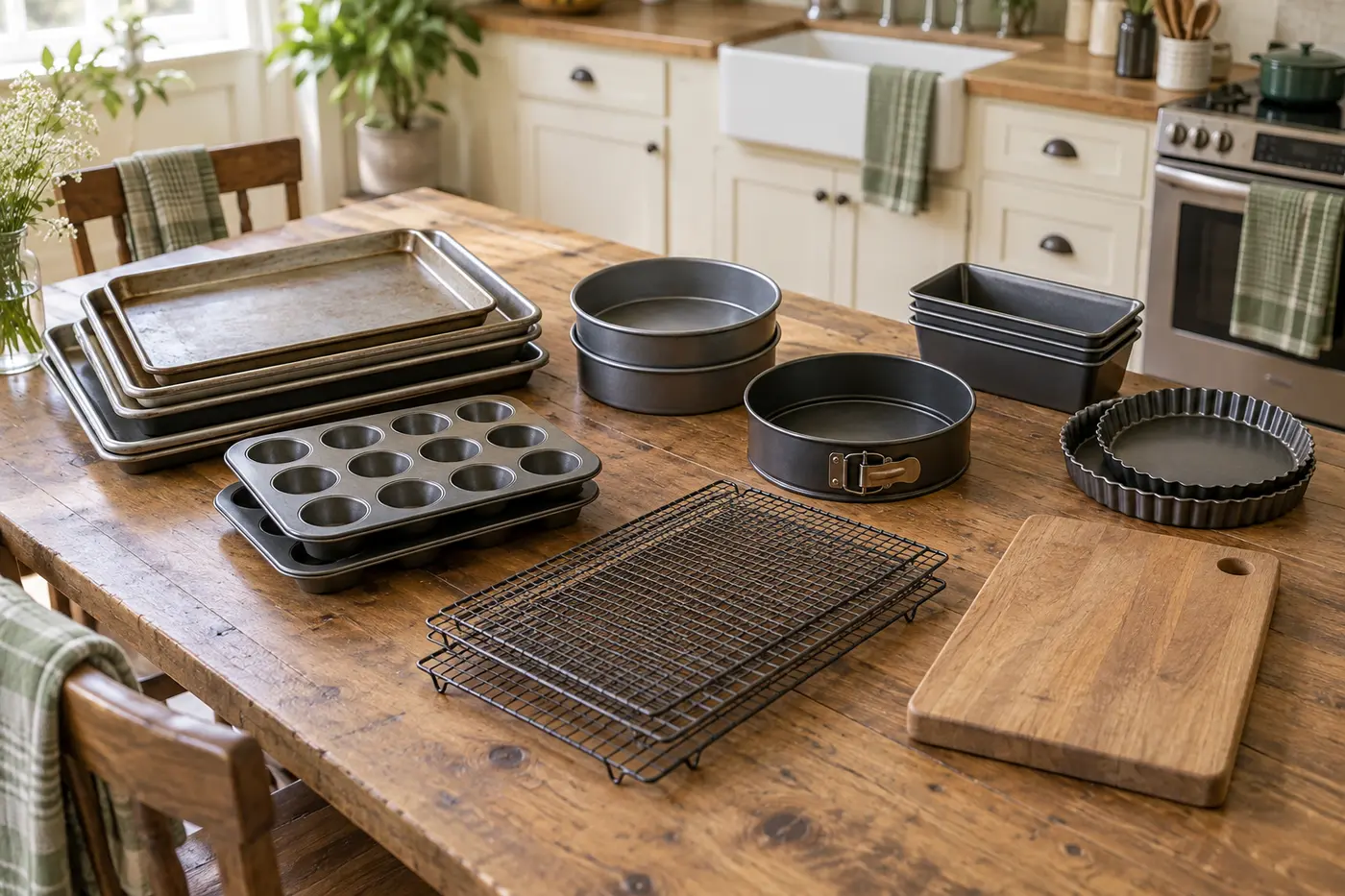
Bring together baking sheets, roasting pans, muffin tins, cake tins, cooling racks, baking dishes and any cutting boards stored with them. Check the oven and dishwasher for pieces in use. Seeing the complete category prevents a new organizer from being filled before everything returns.
2. Edit duplicates and specialty shapes
Keep the pans that match the way you cook now. Review warped, damaged or uncomfortable pieces according to their material and manufacturer guidance. If several pans serve the same purpose, retain the sizes and quantities that fit a normal cooking cycle.
Use the contained decluttering method if the category is too large to assess at once. Specialty pans used once a year can move outside the prime cooking zone.
3. Measure the largest piece and the cabinet opening
Measure the width, height and depth of the largest pan you plan to store. Then measure the cabinet opening, not only the inside. Note hinges, face frames, shelf lips and the clearance needed to angle a pan through the door.
- Largest pan width and height
- Usable cabinet opening
- Interior depth
- Drawer height and rated load when using a drawer
- Clearance for divider feet or a removable rack
4. Choose vertical or horizontal storage
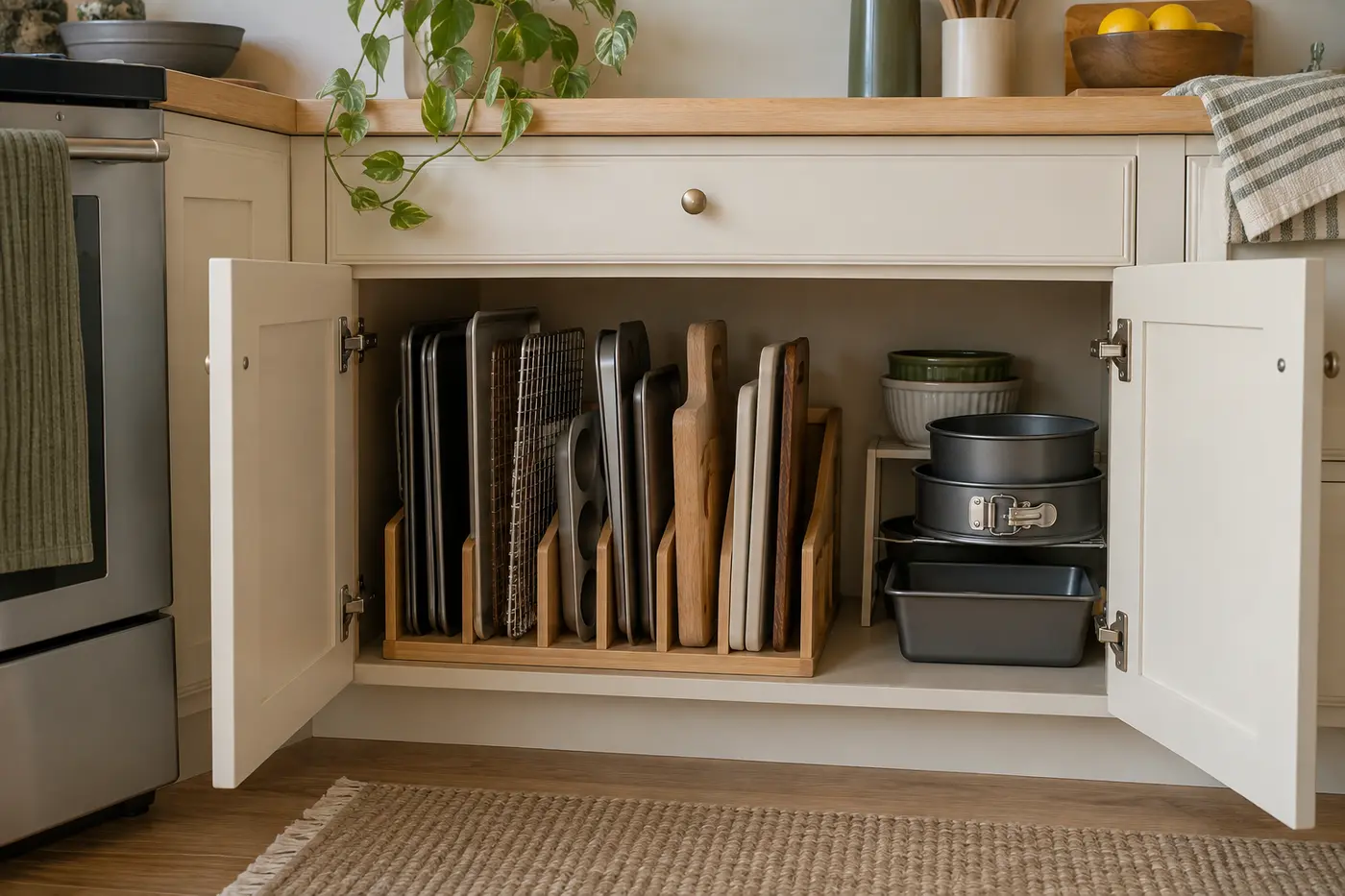
Vertical storage is useful for flat baking sheets, cooling racks and cutting boards when the cabinet is tall enough and the dividers prevent leaning. Horizontal storage can suit nested cake tins, deep roasting pans and heavy dishes. Many kitchens need both methods in one zone.
Choose by retrieval
Use the layout that lets one piece come out without lifting an unstable stack or unloading unrelated cookware.
5. Create stable vertical lanes
Use a purpose-made removable rack, tension divider or secured cabinet divider that suits the space and load. Make each lane wide enough for a small related group rather than squeezing every pan into a separate slot. Test that the divider stays stable when a sheet is removed.
In a rental, avoid drilling or permanent adhesive without approval. A freestanding rack must sit flat and should not shift against the door.
6. Group flat pieces by function
Keep baking sheets with their fitted racks, cake tins by shape and muffin tins together. Cutting boards may share the vertical zone when they remain dry, stable and easy to distinguish. Put the most-used group closest to the opening.
7. Protect finishes without hiding pieces
Follow the care instructions for coated, glass, ceramic and cast-metal bakeware. Use suitable pan protectors between nested pieces when needed, but avoid so much padding that the stack becomes unstable or the cabinet exceeds its practical capacity.
Store heavy pieces low and on a surface that can support them. Do not place a heavy baking dish in a high cabinet simply to free a lower shelf.
8. Give awkward pans a separate decision
Bundt pans, large roasting pans and unusually shaped tins can consume an entire everyday cabinet. If they are used occasionally, place them on a higher shelf or in a labelled household storage area. Keep all removable parts together so the pan remains usable.
A deep corner cabinet may work for one contained specialty group; use the corner cabinet organization guide to preserve retrieval space.
9. Reset the zone after baking
Return clean, fully dry pieces to the same lane or stack. If a pan repeatedly lands elsewhere, its assigned slot may be too narrow or difficult to reach. Adjust the layout rather than forcing an unrealistic routine.
- Keep the front of each lane visible
- Remove crumbs and wipe the cabinet when needed
- Review duplicates when a stack becomes difficult
- Recheck divider stability after changing the collection
Frequently asked questions
What is the best way to organize baking pans?
Store flat pans vertically in stable divided lanes and nest deeper pans horizontally, with the most-used pieces closest to the opening.
How do I store baking sheets in a small kitchen?
Measure the largest sheet and cabinet opening, then use a stable removable rack or dividers that let each group slide out without catching.
Can baking pans be stored in a drawer?
Yes, if the drawer dimensions and rated load suit the pans and the stack can be lifted safely. Keep heavy pieces low and confirm the drawer closes freely.
How do I keep baking pans from scratching?
Follow the manufacturer's care guidance and use suitable protectors between surfaces when needed, without making the stack unstable or too tall.