- Best for
- Mixed containers and crowded cabinets
- Approach
- Match first, then choose storage
- Start here
- Collect every container and lid
Food-storage containers become difficult when the collection is treated as one category. Round lids mix with rectangular bases, small pieces disappear inside large ones and new containers enter without old ones leaving. The result is not a stacking problem alone; it is a compatibility problem.
This guide helps you build a limited working set and then choose a layout for the cabinet, drawer or shelf you actually have. For the wider room plan, see our small-kitchen organization guide.
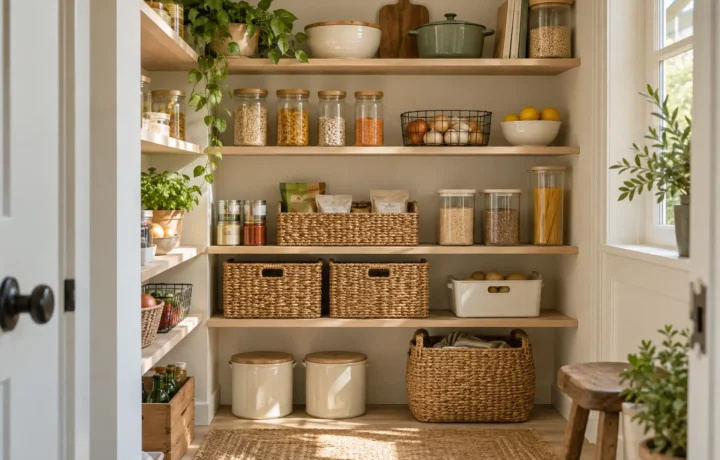
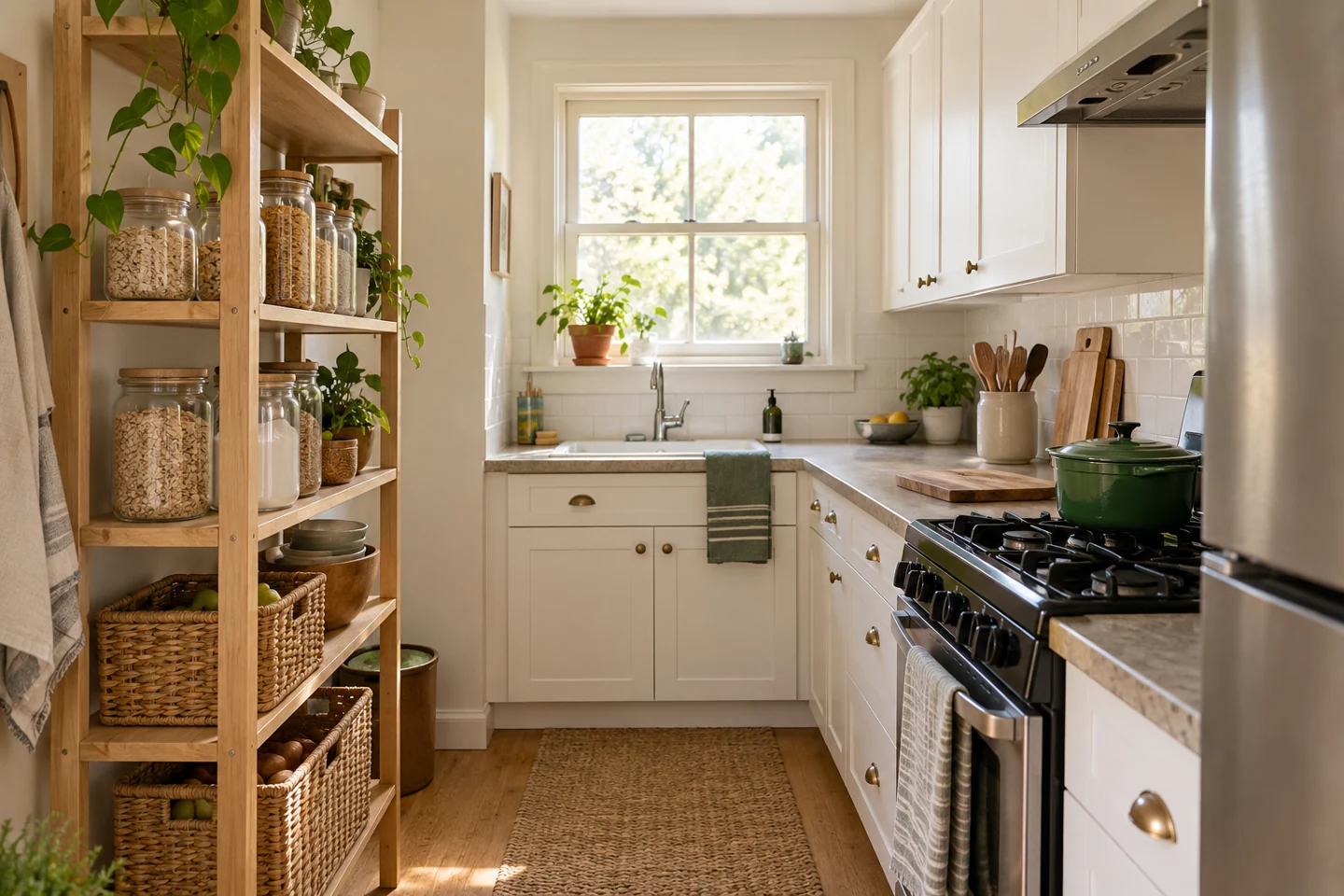
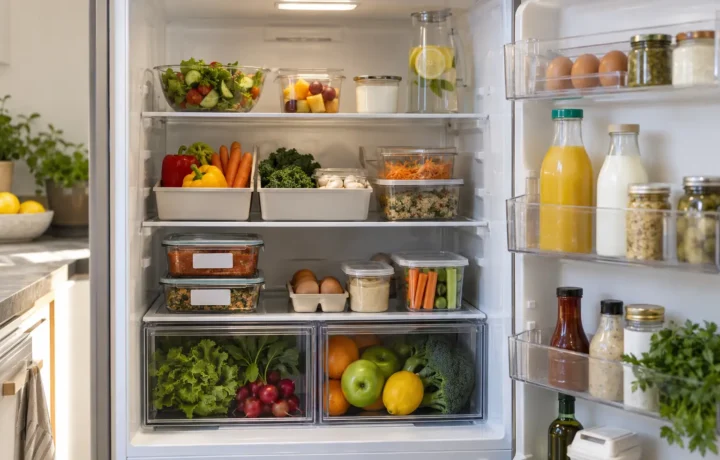
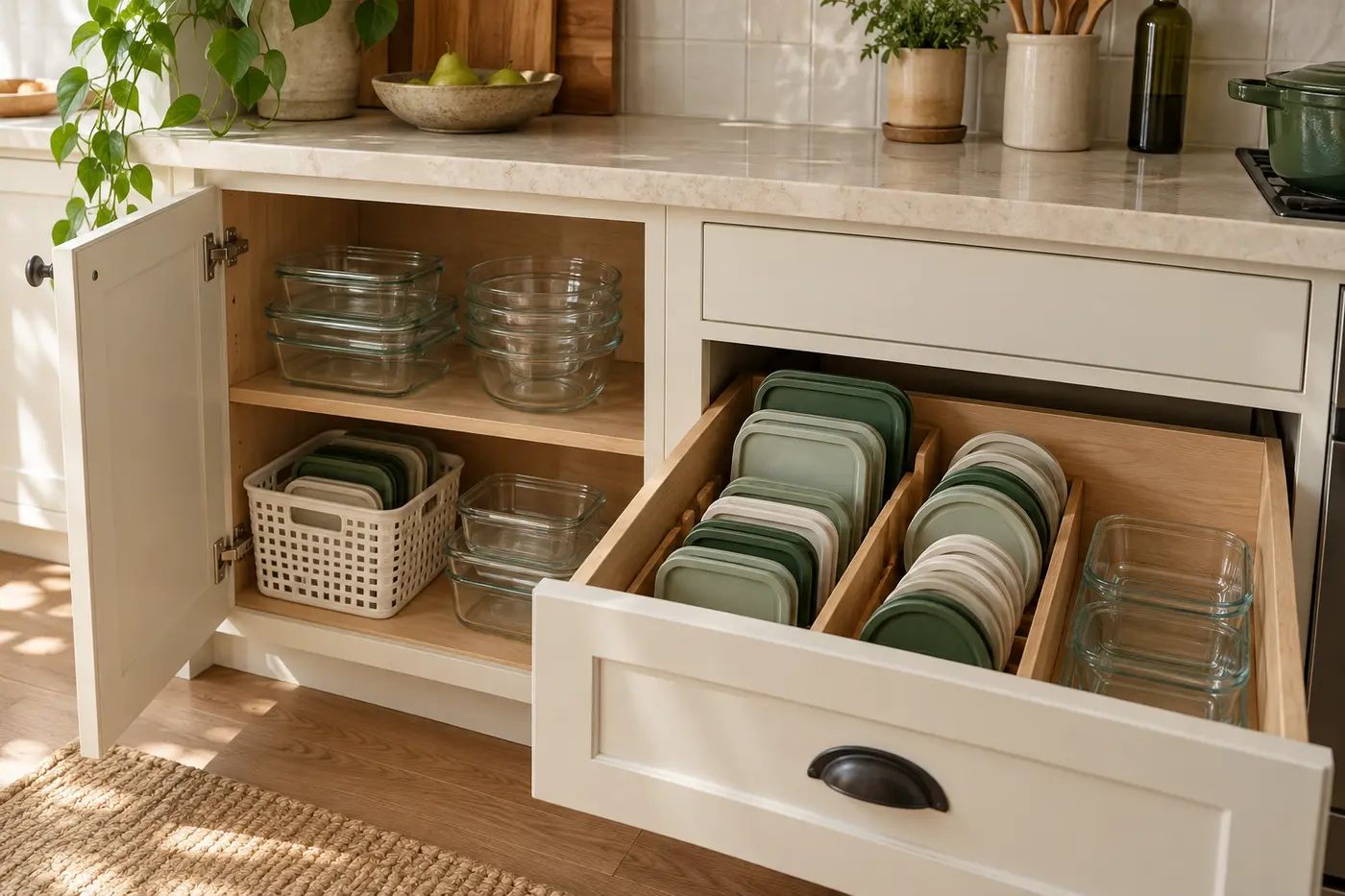
Editorial image note: the photographs in this guide are purpose-created illustrations of the organizing principles described. They are not presented as the author’s home, a client project or proof of a tested result.
In this guide
- 1. Collect every container and lid
- 2. Match each base with a usable lid
- 3. Keep quantities that match your routine
- 4. Choose one home close to use
- 5. Nest bases by shape, not by size alone
- 6. Store lids upright when possible
- 7. Give small pieces a defined limit
- 8. Add new containers deliberately
- 9. Maintain the system during unloading
- Frequently asked questions
1. Collect every container and lid
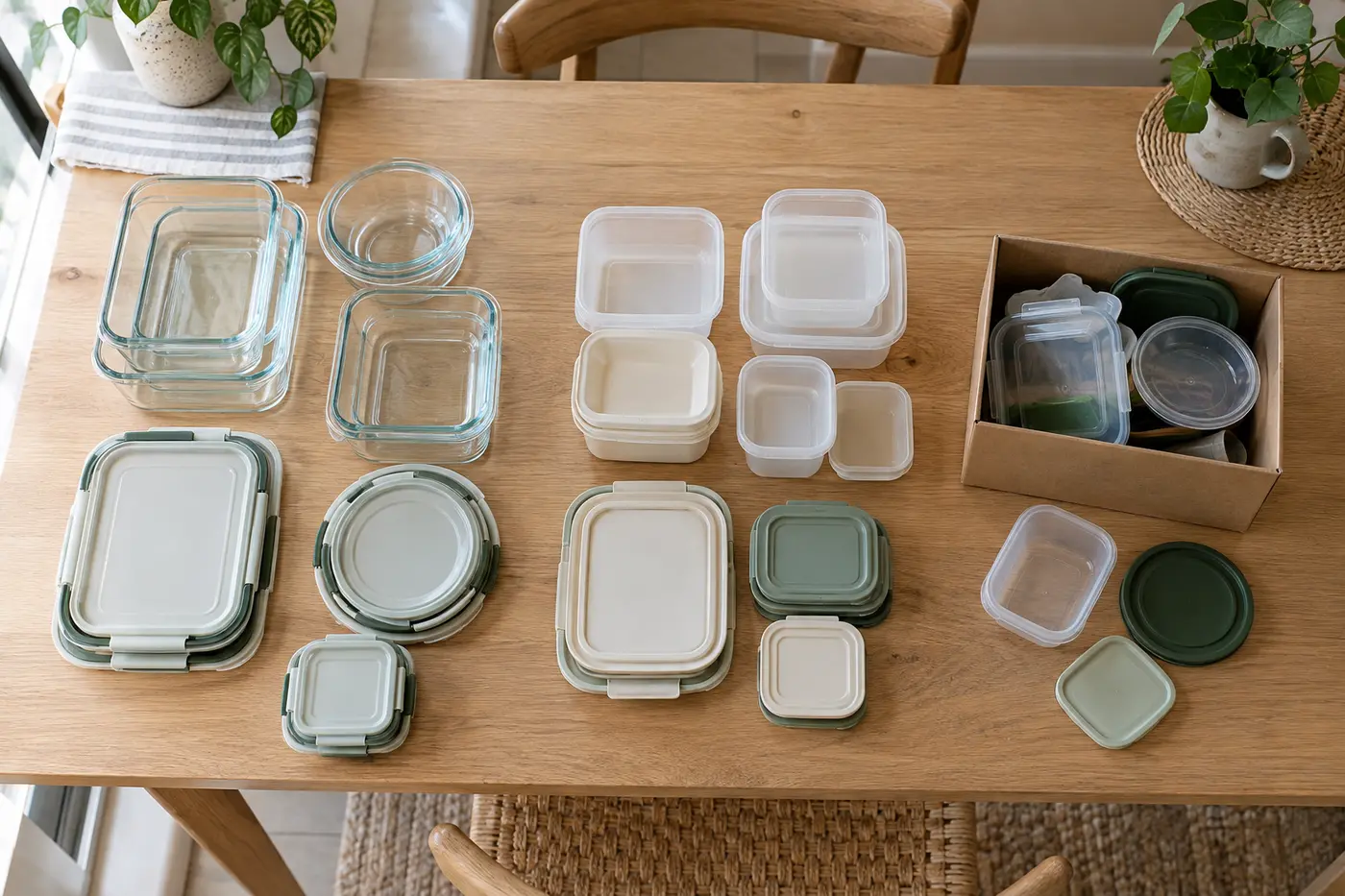
Bring together the containers from cabinets, the dishwasher, lunch bags and the refrigerator. Work on a clean surface and separate pieces that are currently holding food until they are available. Seeing the whole collection prevents repeated partial sorting.
2. Match each base with a usable lid
Pair each base and lid. Check that they close as intended and are in suitable condition for continued use. Follow the manufacturer’s care and replacement guidance, especially for damaged, warped or heavily worn materials.
Set unmatched pieces aside temporarily. At the end, recycle or repurpose them only when the material, condition and local facilities make that appropriate.
3. Keep quantities that match your routine
Estimate what is normally in use between dishwasher cycles, packed lunches and leftovers. Keep a modest buffer for busy days, but do not let rare occasions define the everyday cabinet. If you host occasionally, a separate set can live outside the prime kitchen zone.
Choose compatibility over uniformity
The goal is not one brand or color. It is a small number of shapes and lid types that stack predictably and are easy to match.
4. Choose one home close to use
A drawer near the preparation area works well when it is deep enough and can carry the weight. A lower cabinet is useful for nested bases and vertical lids. A single portable bin can work on a high shelf when the entire collection is light and used less often.
Measure the internal space and any door, hinge or pipe obstructions before adding dividers.
5. Nest bases by shape, not by size alone
Keep round with round and rectangular with rectangular. Nest only a few levels deep so the smallest piece does not disappear. Heavy glass bases should stay on a stable lower shelf or in a drawer rated for the load.
6. Store lids upright when possible
Vertical lid storage makes shapes visible and reduces the need to lift a stack. Use a removable divider, file-style rack or narrow bin that is slightly wider than the largest lid. Keep the lid beside its container group rather than across the room.
If upright storage does not fit, place lids underneath a shallow stack of matching bases. Avoid a tall loose lid pile, which is hard to return and easy to knock over.
7. Give small pieces a defined limit
Tiny dressing or snack containers need their own shallow box so they do not disappear. The box also creates a capacity rule: when it is full, review duplicates before adding more.
8. Add new containers deliberately
Before buying a replacement or new set, check whether it nests with the existing collection, whether the lid is easy to identify and whether the intended storage area has room. A useful purchase should simplify the system rather than create another family of pieces.
9. Maintain the system during unloading
The best reset point is when clean dishes are put away. Match obvious pairs, return lids to their lane and move damaged pieces out for review. If the cabinet repeatedly becomes chaotic, reduce the quantity or simplify the number of shapes.
If containers are only one part of an overloaded room, the kitchen-decluttering guide provides a contained way to edit the other zones.
Frequently asked questions
Should food containers be stored with the lids on?
Either method can work. Keeping lids separate usually saves space; keeping them attached makes matching immediate. Choose the method that fits the available space and allows pieces to dry fully.
What is the best way to organize container lids?
Store them upright by shape in a narrow bin or divider close to the matching bases, with the largest lids at the back.
How many food-storage containers should I keep?
Keep enough for the routine between washing cycles, lunches and leftovers, plus a small practical buffer. The right number depends on the household and habits.
Can glass food containers go in a drawer?
Only when the drawer and hardware can safely support the weight and the containers can be lifted without collision. A stable lower cabinet may be more suitable.