- Best for
- Standard refrigerators in small kitchens
- Approach
- Use broad food zones and visible use-first items
- Start here
- Check temperature and follow food-safety guidance
A refrigerator becomes difficult when containers hide behind one another, leftovers have no visible place and every shelf is packed to the edge. Organization should make food easier to identify while supporting the appliance’s airflow and current food-safety guidance. It does not require transferring every product into a matching bin.
This guide creates broad, flexible zones for a standard refrigerator in a small kitchen. Always follow the appliance manual, food labels and authoritative guidance for temperature, storage and discarding food. For the whole-room plan, see the small-kitchen organization guide.
Editorial image note: the photographs in this guide are purpose-created illustrations of the organizing principles described. They are not presented as the author’s home, a client project or proof of a tested result.
In this guide
- 1. Start with temperature and food-safety guidance
- 2. Reset one shelf at a time
- 3. Create broad zones around how food is used
- 4. Prevent raw foods from contaminating ready-to-eat items
- 5. Give leftovers one visible use-first area
- 6. Use produce drawers as working categories
- 7. Use fewer bins and preserve airflow
- 8. Treat the door as a separate storage condition
- 9. Use a short weekly refrigerator reset
- Frequently asked questions
1. Start with temperature and food-safety guidance
Check the refrigerator temperature with an appliance thermometer and use the setting and placement instructions supplied with the appliance. In the United States, FoodSafety.gov’s four food-safety steps advise keeping the refrigerator at 40°F or below and refrigerating perishable food promptly. Guidance differs by location, so use the appropriate authority where you live.
Safety overrides the organizing system
When a food label, appliance manual or public-health authority gives a storage instruction, follow it even if another shelf would look tidier.
2. Reset one shelf at a time
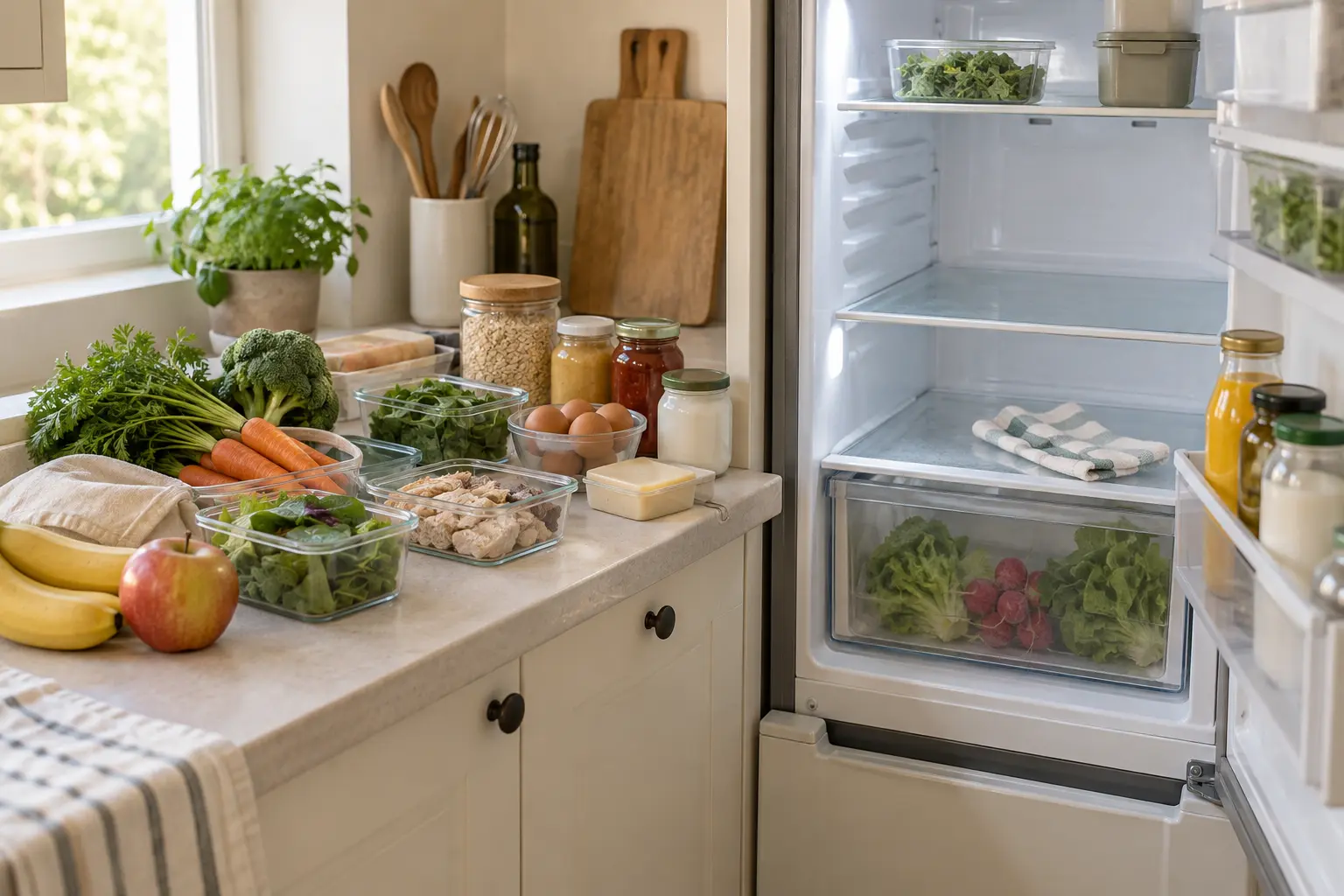
Prepare a clear work surface and remove one shelf’s contents rather than emptying the whole refrigerator. Check foods according to applicable safety guidance, discard items when required and wipe the shelf using the appliance instructions. Return chilled items promptly. This contained approach limits the time food spends out of refrigeration and makes the project easier to finish.
3. Create broad zones around how food is used
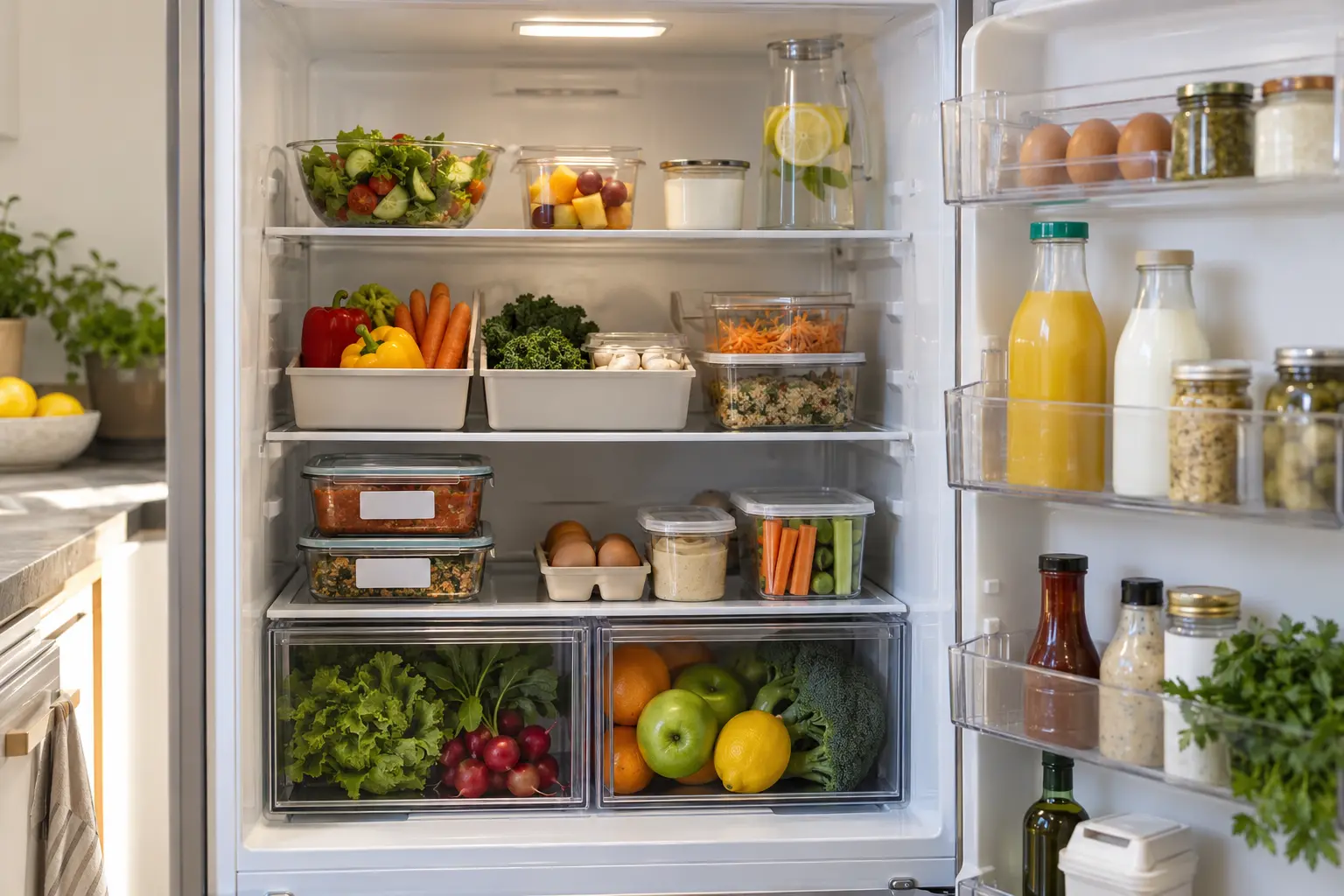
Useful zones may include ready-to-eat food, meal ingredients, leftovers, produce, breakfast items and condiments. The exact shelf matters less than safe storage and visibility. Keep groups broad enough to adapt after shopping. A narrow bin can hold a category, but it should not reduce usable space or make cold air circulation more difficult.
- Ready-to-eat and use-first foods
- Ingredients for planned meals
- Clearly stored leftovers
- Produce in the appropriate drawers
- Condiments and drinks in suitable areas
4. Prevent raw foods from contaminating ready-to-eat items
Keep raw meat, poultry, seafood and eggs stored and contained according to current food-safety guidance so liquids cannot drip onto other foods. Use a washable tray when appropriate and clean spills promptly. Do not copy a photograph or social-media diagram when it conflicts with packaging instructions or guidance from your local food-safety authority.
5. Give leftovers one visible use-first area
Use containers suitable for the food and storage method, and mark them with the identity and date when that helps the household follow safe-storage guidance. Keep the current leftovers together at eye level rather than scattering them behind ingredients. Review the zone before cooking or shopping so usable food is not forgotten.
Maintain a compatible container set with the food-storage-container guide. Avoid stacking so high that the lower container cannot be identified or removed safely.
6. Use produce drawers as working categories
Follow the appliance settings and food guidance for the produce you buy. Keep items visible enough to review before shopping, and avoid compressing delicate produce under heavy items. If a drawer becomes a forgotten zone, divide it into two broad groups or keep a short use-first container near the front.
7. Use fewer bins and preserve airflow
Bins are helpful for small packets, one breakfast group or ingredients that move together. They are less helpful when every item is transferred, every shelf loses width or containers block vents. Check the manual for vent locations and loading guidance. Leave space to see behind groups and to move a container without unloading the shelf.
Choose washable containers that fit the shelf without forcing the door or changing how it closes. A bin should come out as one controlled unit and return to the same place. If the household stops using it that way, remove the bin and keep the simpler shelf zone.
8. Treat the door as a separate storage condition
The refrigerator door experiences different conditions from interior shelves. Store foods there only when the appliance and food guidance indicate that location is suitable. Group similar bottles and jars, keep caps clean and remove expired or no-longer-used condiments according to the label and applicable guidance.
9. Use a short weekly refrigerator reset
Before planning meals or shopping, scan the use-first area, leftovers, produce and open containers. Wipe small spills, return migrated foods to their zone and note what should be used soon. A short review is more sustainable than repeatedly emptying and restyling the appliance.
Treat the reset as a food-visibility check rather than a styling task. The useful outcome is knowing what is safe, what should be used next and what does not need to be purchased again. Containers and labels support that decision; they are not the goal themselves.
- Confirm the appliance is operating as intended
- Review leftovers and use-first foods
- Check produce before buying more
- Keep vents and circulation paths clear
- Clean spills using the appliance guidance
Frequently asked questions
How should I organize a small refrigerator?
Create broad zones for ready-to-eat foods, ingredients, leftovers, produce and condiments while following the appliance manual and current food-safety guidance.
Do refrigerator bins save space?
They can contain small related items, but too many bins may reduce usable width, hide food or interfere with airflow. Use a bin only when it improves a specific category.
Where should leftovers go in the refrigerator?
Keep properly stored leftovers in one visible use-first area and follow current guidance for cooling, dating and safe storage times.
How often should I reset the refrigerator?
A brief review before meal planning or shopping can keep food visible. Clean spills promptly and follow the appliance and food-safety guidance for deeper cleaning and discarding food.