- Best for
- Kitchens with a visible laundry nook
- Approach
- Soften the view without sealing the appliances
- Start here
- Confirm access, airflow and manufacturer clearances
Visible laundry hookups in a kitchen can make an already busy room feel more mechanical. The answer is not to seal the machines inside a decorative box. Washers and dryers need the ventilation, clearances, connections and service access specified for the appliances and building, and shutoff valves must remain reachable.
This guide explores removable ways to soften the view while keeping the laundry zone functional. It is visual organization, not plumbing, electrical, gas or construction advice. Begin with written rental permission and the appliance manuals, then connect the finished nook to the wider renter-friendly kitchen plan.
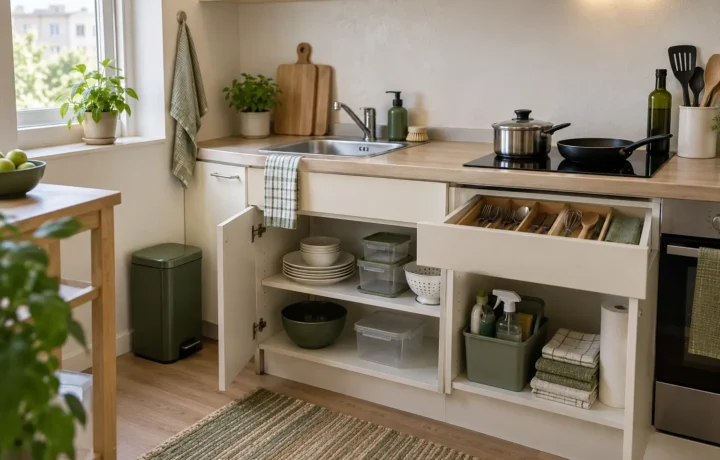
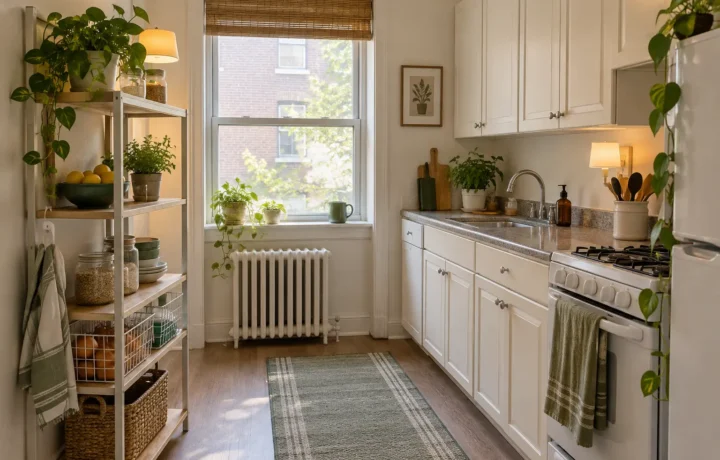
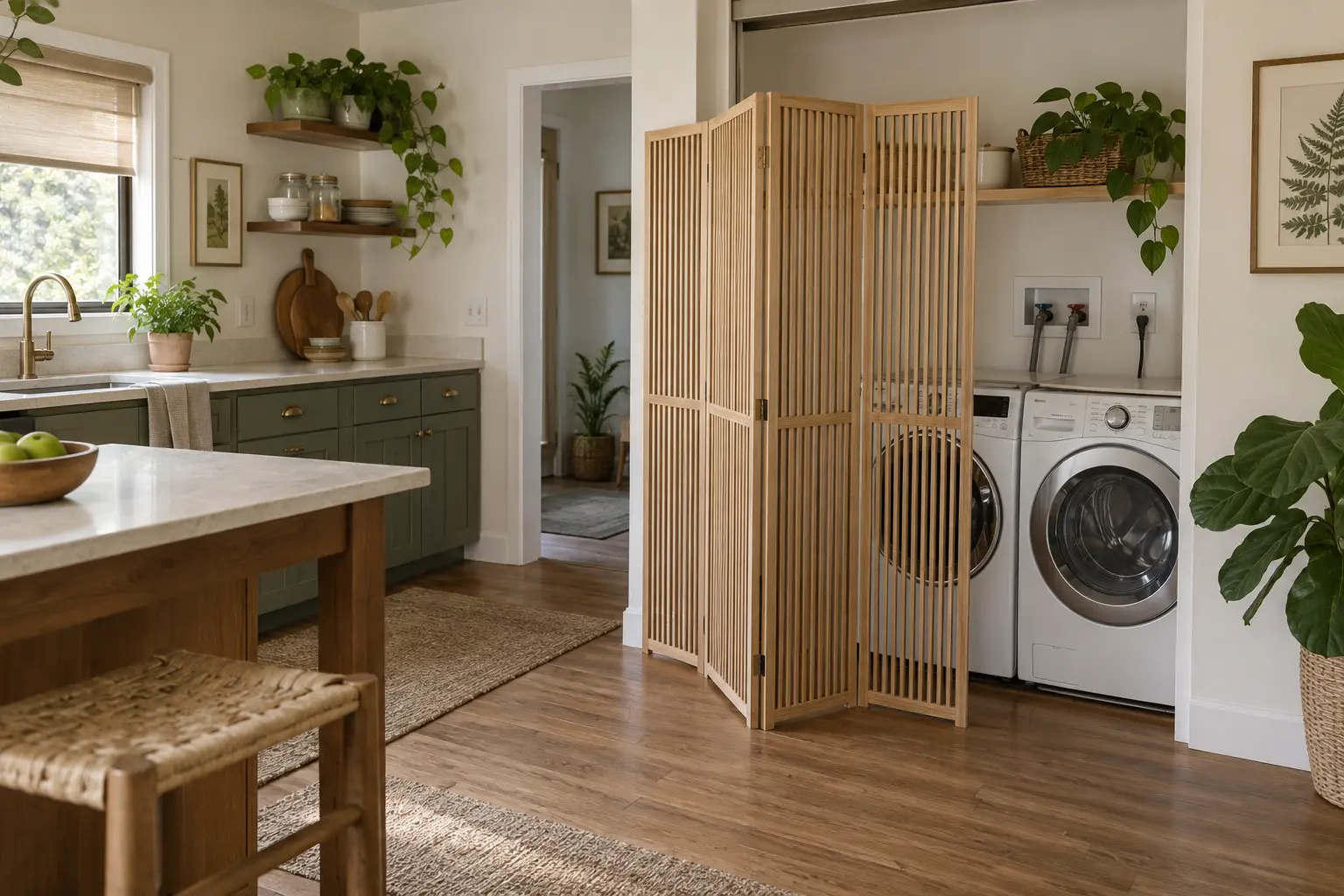
Editorial image note: the photographs in this guide are purpose-created illustrations of the organizing principles described. They are not presented as the author’s home, a client project or proof of a tested result.
In this guide
- 1. Record every functional requirement
- 2. Ask what the property permits
- 3. Consider a freestanding folding screen
- 4. Use an openable curtain only with safe separation
- 5. Reduce visual noise inside the working zone
- 6. Test every door and access route
- 7. Open the screen during use when required
- 8. Make inspection part of the routine
- Frequently asked questions
1. Record every functional requirement
Locate water shutoffs, hoses, drains, electrical connections, dryer ventilation, filters, controls and service panels. Record the manufacturer-required clearances and the complete path for opening doors, loading machines and pulling a unit forward for inspection or repair. Gas-connected or hard-wired equipment requires particular professional care.
Never hide a safety problem
Leaks, damaged hoses, unusual heat, odour, unstable power, blocked dryer exhaust or other concerns need prompt assessment. A curtain or screen must not delay noticing or reaching them.
2. Ask what the property permits
Share the proposed treatment with the landlord or property manager, including how it stands, attaches and opens. Avoid drilling, fixing into cabinetry, changing utility connections or building an enclosure without explicit written approval and any required qualified work.
A freestanding element is often easier to reverse, but it still needs a stable parking position that does not narrow an exit, kitchen walkway or appliance working area.
3. Consider a freestanding folding screen
A lightweight folding screen can create a visual boundary without touching the machines. Position it outside all required clearances and where it cannot tip into a hot surface, door path or connection. Choose a height and width that screen the busiest lines while leaving inspection and airflow straightforward.
The screen needs a planned open position during laundry use. If moving it blocks another kitchen task or exit, reduce its size or choose a different approach.
4. Use an openable curtain only with safe separation
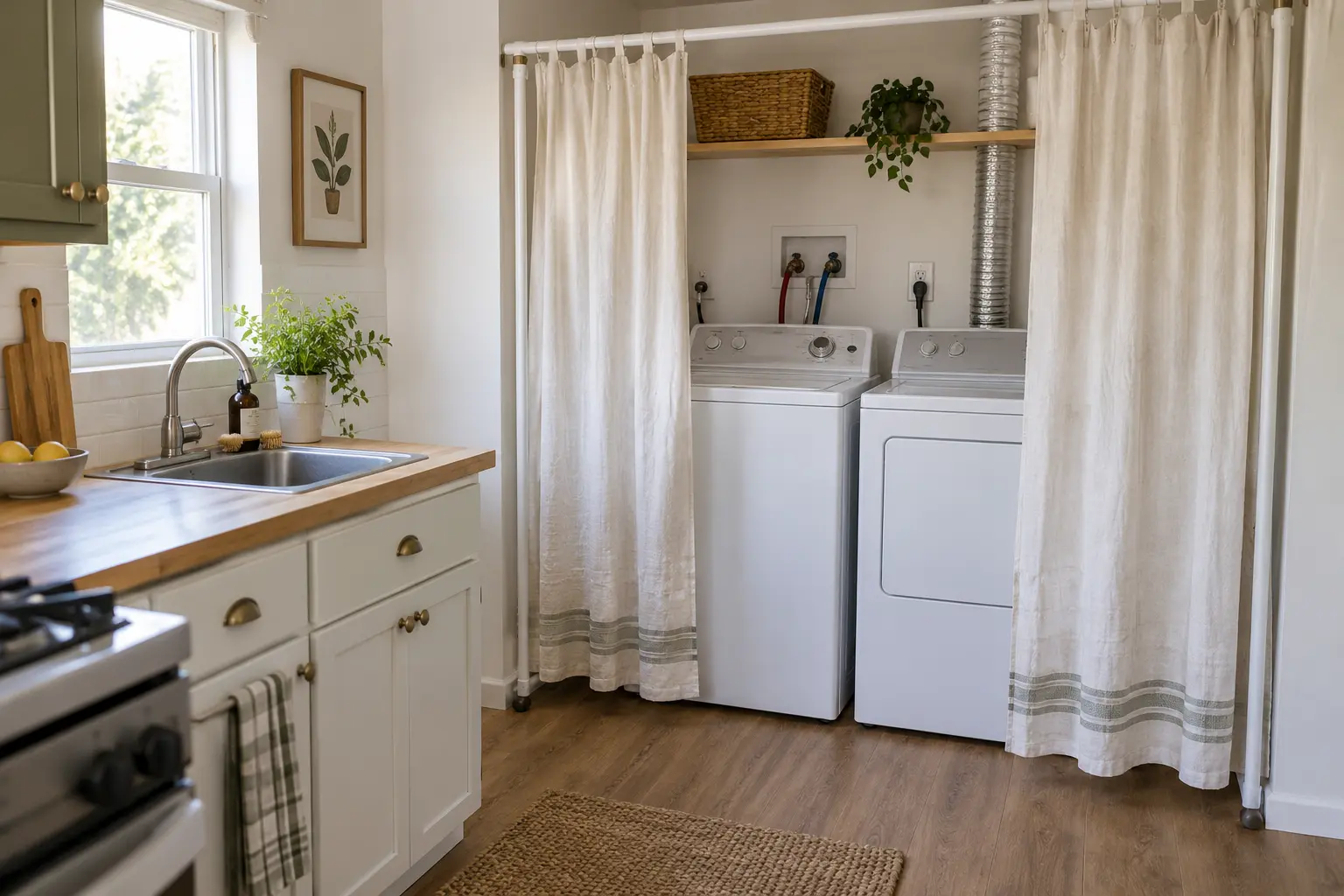
A washable curtain on a permitted freestanding or tension-style support can soften a recessed laundry nook. Keep fabric well away from appliances, vents, heat, moving doors and connections. The support must be secure without damaging the rental surface, and the curtain should open fully for operation and inspection.
Do not drape fabric directly over a washer or dryer, and do not rely on a decorative textile to satisfy fire, ventilation or building requirements. When the safe spacing is uncertain, do not install the curtain.
5. Reduce visual noise inside the working zone
Before adding a screen, remove unrelated objects from the top and floor around the machines. Store only the detergent and tools permitted by their labels and keep them away from children, pets, heat and food-preparation items. Use one stable removable caddy if it fits the safe working area.
Route nothing around hoses, cords or exhaust ducts. A calmer backdrop comes from fewer visible supplies and a defined boundary, not from concealing the connections behind more storage.
6. Test every door and access route
Open appliance doors, nearby cabinets, the refrigerator and the room door to their normal positions. Walk the laundry path with an empty basket. Confirm that the screen or curtain does not create a pinch point, snag, trip edge or narrow passage.
- Appliance doors open fully
- Controls and labels remain visible
- Shutoffs and connections are reachable
- Required ventilation stays unobstructed
- A technician can access the machines
- The kitchen exit and work aisle stay clear
7. Open the screen during use when required
Follow appliance instructions for ventilation and supervision. Move or open the visual screen whenever the design, material or appliance guidance requires it, and keep the open panel or curtain secured away from hot or moving equipment. Never use the screen as a drying rack.
After the cycle, check the area, address moisture promptly and let the nook ventilate. Return the screen only when the machines and space are in the condition their instructions require.
8. Make inspection part of the routine
Open the visual treatment regularly and inspect the floor, hoses, connections, lint areas and nearby surfaces according to appliance and property guidance. Clean the screen or curtain using its care instructions and replace an unstable, damaged or heat-affected material.
If the treatment makes inspections less frequent or problems harder to see, remove it. The best solution improves the room’s visual order without weakening the laundry routine.
Frequently asked questions
Can I put a curtain in front of a washer and dryer?
Only when rental permission, appliance instructions, ventilation and safe clearances allow it. Keep fabric well away from machines, vents, heat and connections, and open it fully when required.
How can I hide laundry hookups without building a cabinet?
A stable freestanding folding screen or permitted openable curtain can soften the view while remaining removable. It must preserve shutoff, hose, control, ventilation and service access.
Can I cover washer hoses and valves?
Do not make them inaccessible or difficult to inspect. A visual treatment should open immediately and leave the working connections reachable according to appliance and property guidance.
Should a laundry screen stay closed while machines run?
Follow the appliance and screen material instructions. Open or remove it whenever needed for ventilation, heat clearance, supervision or access, and never create a sealed enclosure without an approved design.