- Best for
- Rental kitchens without permanent remodeling
- Approach
- Solve daily friction with removable pieces
- Start here
- List the problems and review the lease
A rental kitchen can be frustrating without needing a complete transformation. The counter may lack task lighting, one cabinet may waste vertical space and the tools used every morning may have nowhere convenient to return. The best renter-friendly kitchen upgrades solve those specific points of friction while keeping the original room intact.
This guide focuses on portable and removable changes rather than cosmetic promises. It supports the wider small-kitchen organization plan and helps you decide what is worth adding before you buy another organizer.
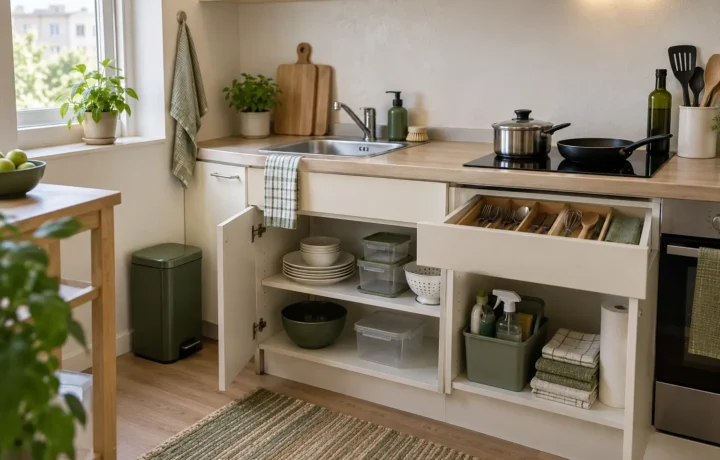
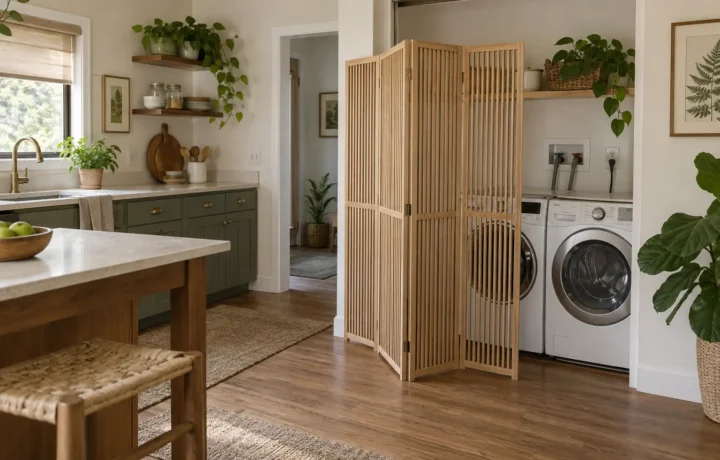
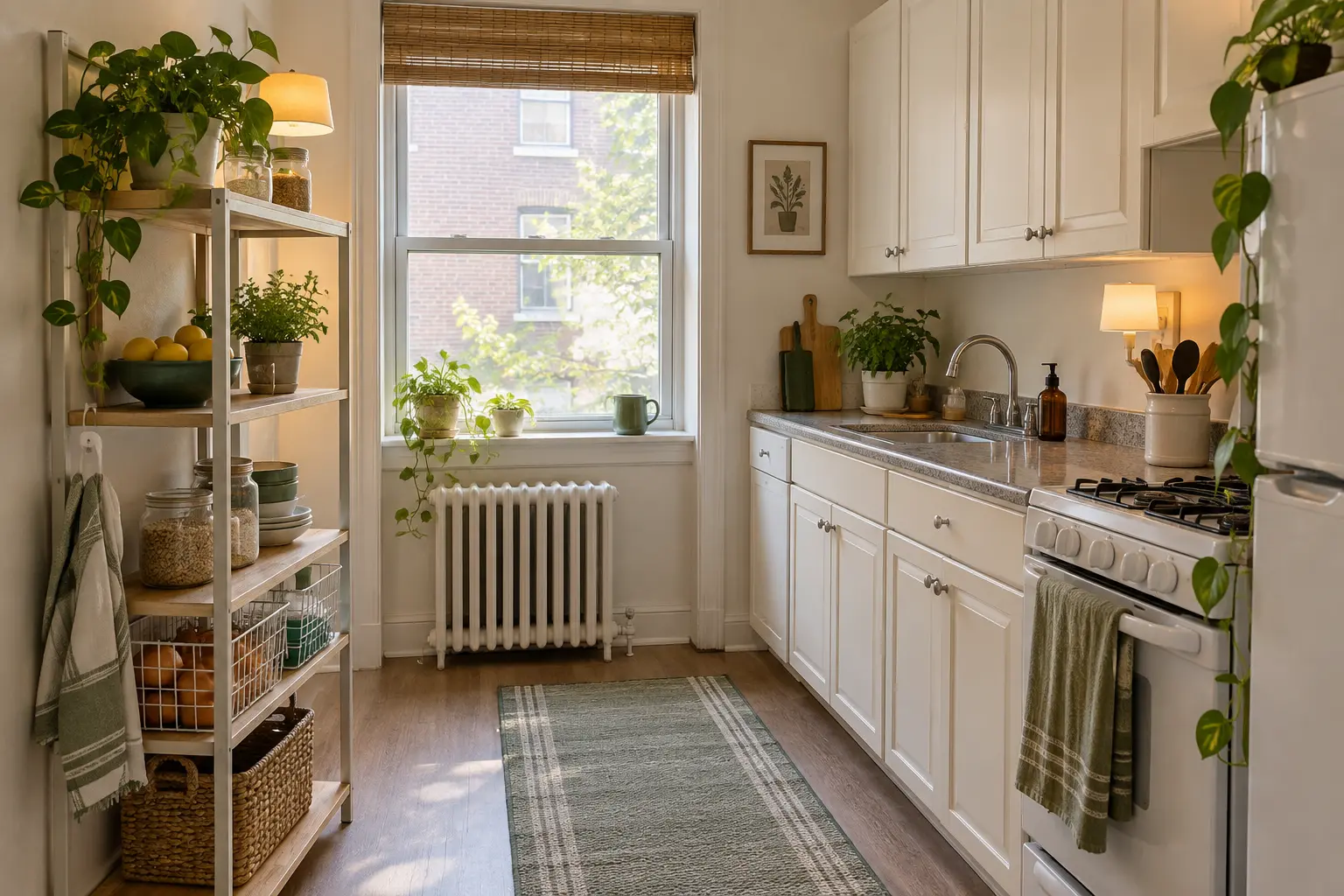
Editorial image note: the photographs in this guide are purpose-created illustrations of the organizing principles described. They are not presented as the author’s home, a client project or proof of a tested result.
In this guide
- 1. Read the lease and ask before changing surfaces
- 2. Name the daily problem before choosing an upgrade
- 3. Add counter storage without losing workspace
- 4. Use vertical space with removable systems
- 5. Improve task lighting with portable fixtures
- 6. Make cabinet interiors easier to use
- 7. Choose storage that can move with you
- 8. Reduce the category before adding capacity
- 9. Keep a removal record
- Frequently asked questions
1. Read the lease and ask before changing surfaces
Rental agreements and building rules differ. Review the clauses covering paint, adhesive products, hardware, electrical work and appliance changes. When a proposed change is not clearly allowed, ask the landlord or property manager in writing and keep the response. A product described as removable does not guarantee that it will suit every paint, finish or surface.
Reversible still needs a test
Test any contact material in a hidden area, follow the product instructions and stop if the surface softens, stains or lifts. If you cannot test it safely, choose a freestanding option.
2. Name the daily problem before choosing an upgrade
Walk through one ordinary meal and notice where the room slows you down. Is the preparation area blocked, are pans difficult to retrieve, or is the light too weak over the task? Write one sentence for each problem. A narrow shelf is useful only when it gives a needed category an accessible home; otherwise it becomes another surface to maintain.
- What task is difficult now?
- Which items need to be closer together?
- What clearances must remain open?
- Where will the upgrade go at the next home?
- How will it be cleaned and removed?
3. Add counter storage without losing workspace
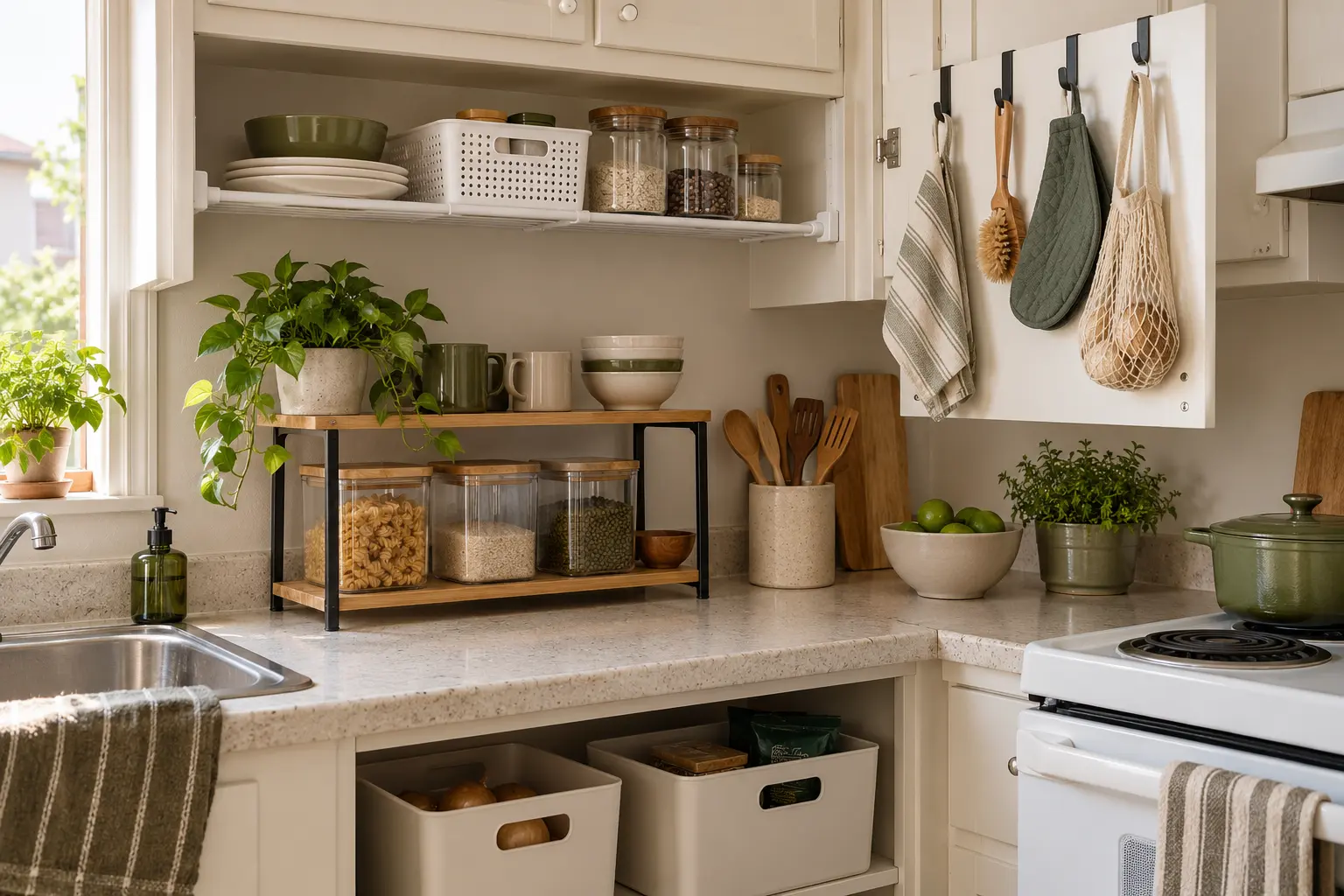
A freestanding riser can create a second level for a small, frequently used group. Keep it shallow enough that the worktop remains usable and stable enough for its contents. Do not place a shelf where it crowds a cooktop, sink, outlet or appliance ventilation area. Store only the items that support the nearby task and move backstock elsewhere.
If adding a shelf makes the counter harder to wipe, the footprint is too large or the category is too broad. The goal is a clearer task zone, not a display of every ingredient and utensil.
4. Use vertical space with removable systems
Under-shelf baskets, tension systems and over-door organizers can add capacity when they fit correctly. Measure the shelf thickness, door clearance and load before choosing one. Confirm that doors and drawers still close freely and that the added piece does not rub the finish. Keep heavy, breakable or hazardous items in supported storage rather than hanging them overhead.
One well-fitted removable piece is usually better than several small accessories competing for the same opening. Give it one defined category so the new space remains easy to reset.
5. Improve task lighting with portable fixtures
A plug-in or rechargeable task light can make preparation easier when the existing fixture leaves a dark counter. Choose a product intended for the location, follow its installation and charging instructions and keep cords away from water, heat and moving doors. Do not alter fixed wiring unless the property owner approves the work and a qualified person completes it where required.
6. Make cabinet interiors easier to use
Removable bins, turntables and shelf risers can help when they match the cabinet and contents. Measure first and choose an organizer for a specific group. For liners, use the decision process in our cabinet-liner guide; a liner should solve a real problem and should not trap moisture or damage a finish.
7. Choose storage that can move with you
A narrow cart, freestanding shelf or handled bin should earn its floor space by serving more than one possible layout. Record its outside dimensions and keep assembly parts together. Avoid buying a complicated unit for one unusual gap unless it can be reconfigured later. Portable storage becomes a better investment when it works in a pantry, bathroom or utility area too.
8. Reduce the category before adding capacity
Extra storage cannot correct an oversized category. Use the contained kitchen-decluttering method to remove duplicates, incomplete sets and items that belong elsewhere. Then size the upgrade for the edited group with a little working room. This keeps a new organizer from becoming a reason to keep more than the kitchen can support.
9. Keep a removal record
Photograph the area before an approved change and store original hardware in a labelled bag. Keep product instructions and note how each item should be removed or cleaned. Before moving out, allow time to restore the space carefully rather than pulling everything down at once.
- Review the lease before installation
- Keep written permission when needed
- Save original parts and instructions
- Inspect contact points regularly
- Restore the room before the final inspection
Frequently asked questions
What kitchen upgrades are usually renter-friendly?
Freestanding shelves, correctly fitted removable organizers and portable task lighting can be renter-friendly, but the lease, surface and product instructions still determine what is appropriate.
Can I use peel-and-stick products in a rental kitchen?
Only after reviewing the lease, obtaining permission when needed and testing the exact product on the exact surface. Removable marketing does not guarantee damage-free removal.
How can I add storage without drilling?
Use freestanding carts, shelf risers, handled bins, tension systems or over-door storage that fits the opening and rated load without rubbing doors or finishes.
Which rental-kitchen upgrade should I do first?
Start with the repeated problem that affects a daily task, then choose the smallest reversible change that resolves it while preserving safe clearances.