- Best for
- First apartments and compact kitchens
- Approach
- Start with functions rather than matching sets
- Start here
- List regular meals and measure storage
A first-apartment kitchen does not need every tool found in a large registry. It needs enough equipment to prepare, serve, store and clean up after the meals you expect to make. Starting with functions keeps the list useful and prevents a small cabinet from filling with specialized items before daily routines are clear.
This first-apartment kitchen essentials guide is a planning framework, not a shopping requirement. Adjust it for the appliances supplied with the home, your cooking habits, household size and storage. For the room layout, use our small-kitchen organization guide.
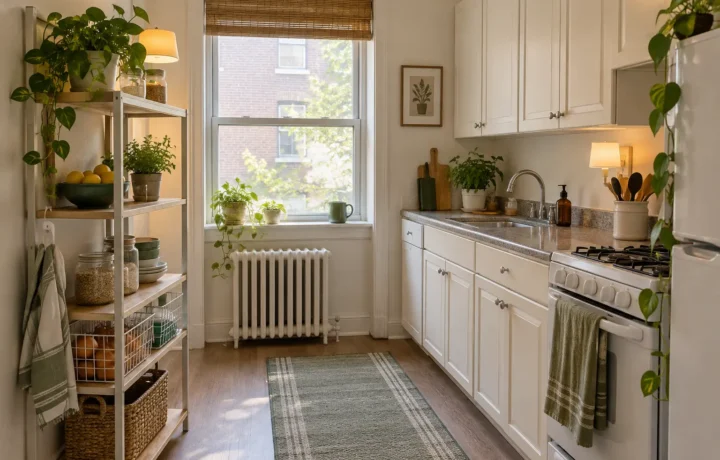
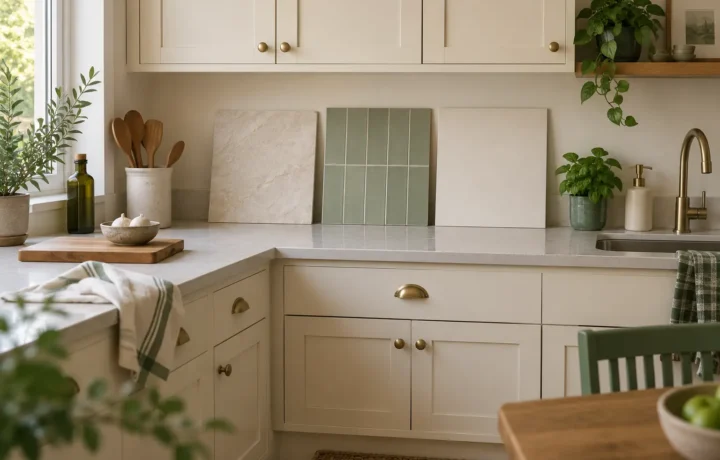
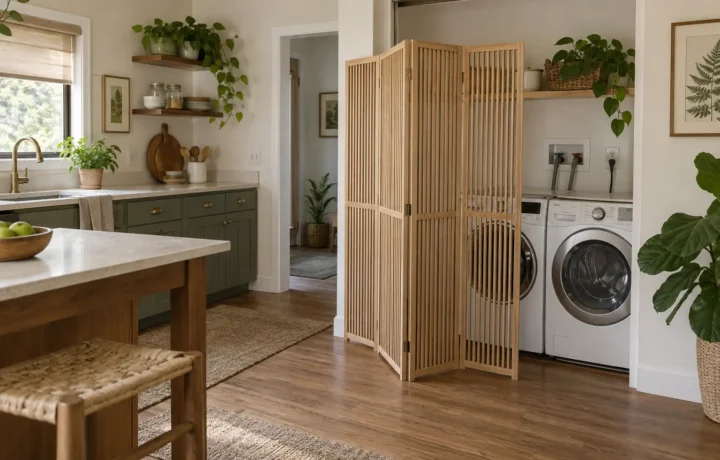
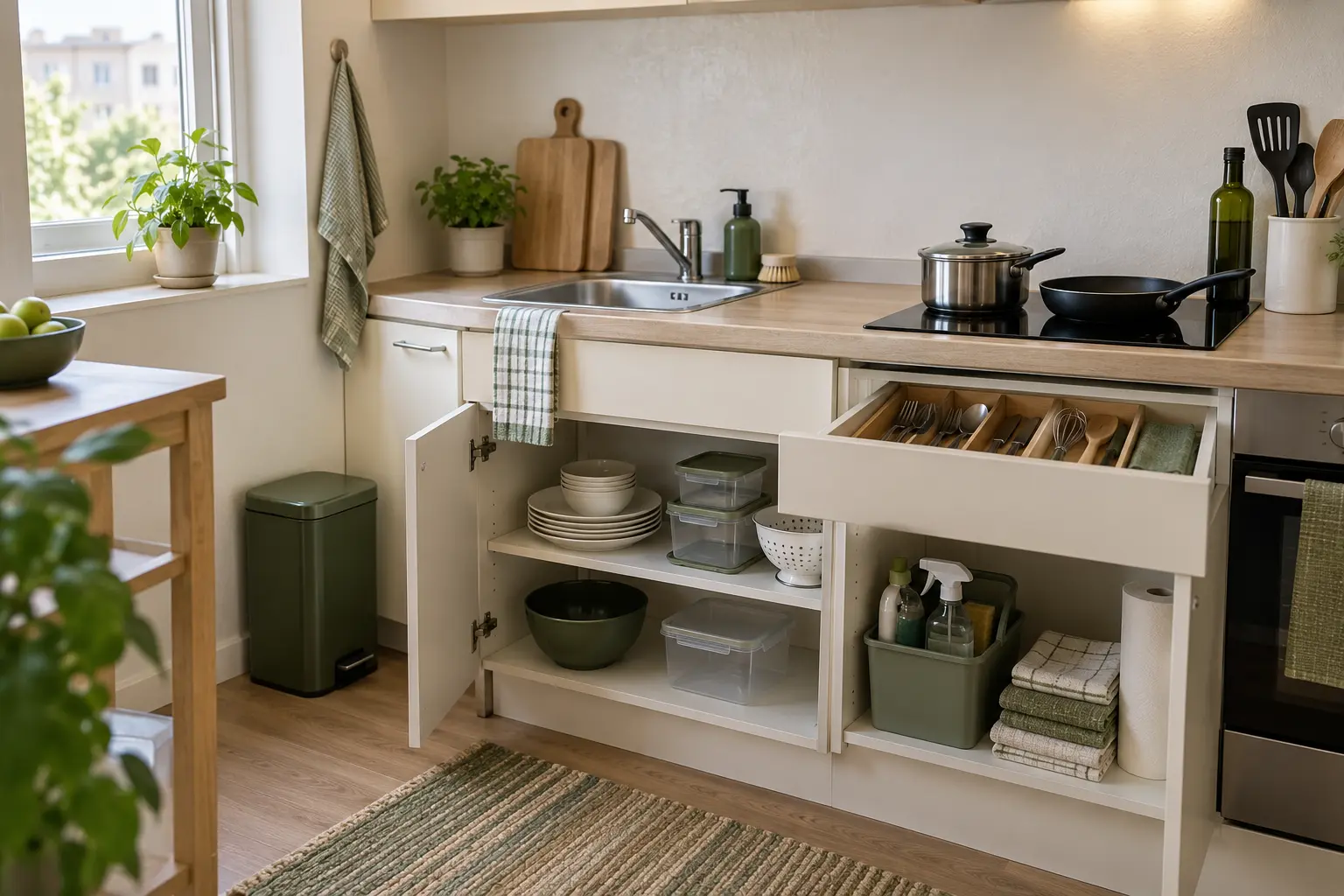
Editorial image note: the photographs in this guide are purpose-created illustrations of the organizing principles described. They are not presented as the author’s home, a client project or proof of a tested result.
In this guide
- 1. Inventory the kitchen before you shop
- 2. Plan around five ordinary meals
- 3. Start with versatile cookware and bakeware
- 4. Cover the basic preparation tasks
- 5. Build a limited eating and drinking set
- 6. Choose a compatible food-storage set
- 7. Prepare a simple cleanup station
- 8. Delay specialized appliances and gadgets
- 9. Put the starter set into working zones
- Frequently asked questions
1. Inventory the kitchen before you shop
Check which appliances, shelves and fixtures are included, then measure usable drawers and cabinets. Test the oven and cooktop only according to the move-in instructions and report faults to the appropriate contact. Ask whether family or housemates are already providing shared items so the kitchen does not begin with three kettles and no suitable saucepan.
- Supplied appliances and their instructions
- Usable drawer and cabinet dimensions
- Shared items already available
- Household size and regular meals
- Available budget and replacement priorities
2. Plan around five ordinary meals
Write down five meals or food routines you expect to repeat: perhaps pasta, eggs, soup, a tray meal and packed lunches. Note the minimum tool needed for each step. This reveals whether one medium saucepan and one frying pan can cover the first month, or whether your routine genuinely needs another size.
Let a missing function prove the next purchase
Use the starter set for a few weeks. Add an item when a repeated task cannot be completed safely or efficiently with what you own—not because an all-purpose checklist included it.
3. Start with versatile cookware and bakeware
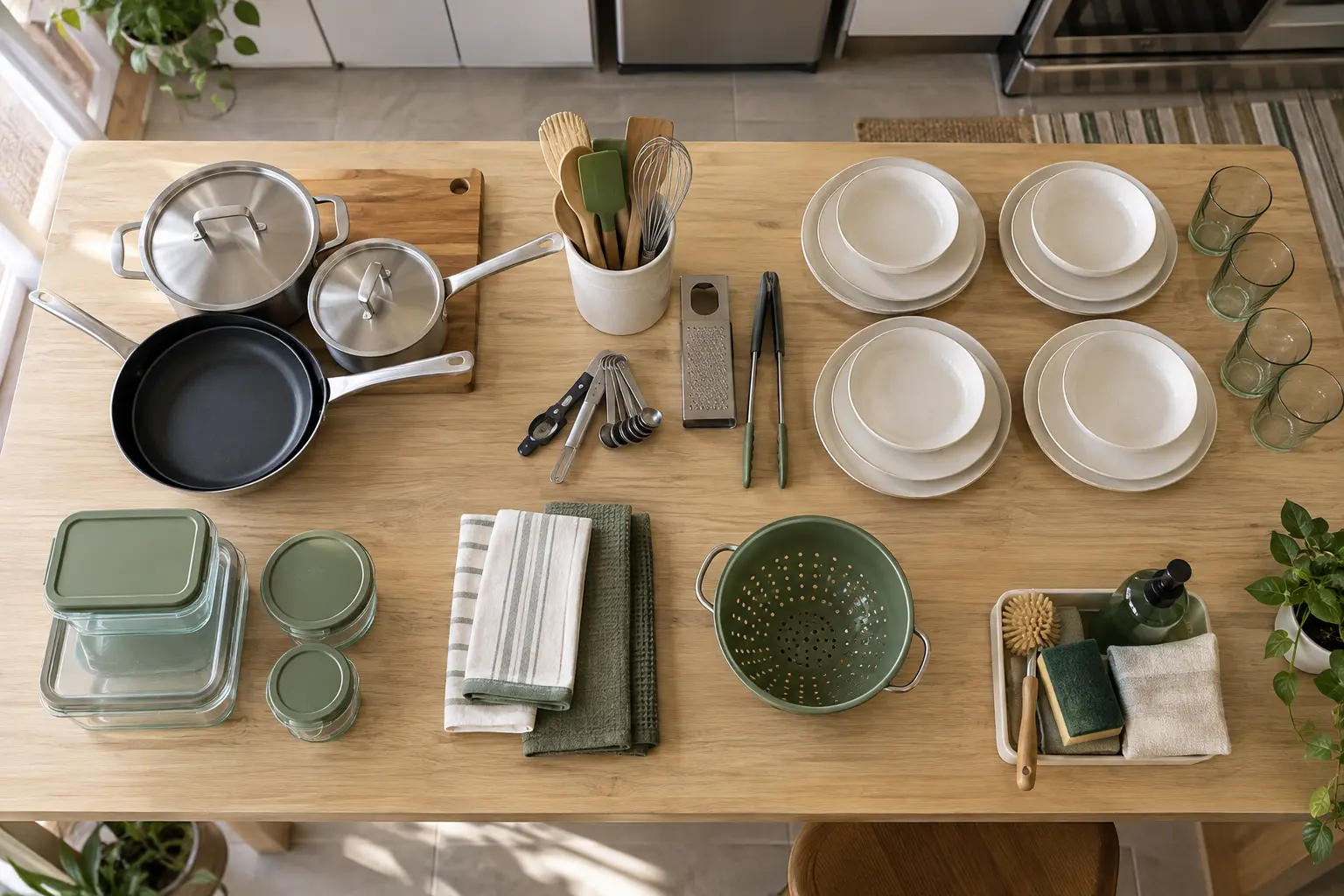
A modest starting point may include a saucepan with a lid, a frying pan, one oven-safe tray if the home has an oven and a mixing bowl that can also serve food. Choose sizes for the household and cooktop. Follow the care and compatibility instructions, especially for induction surfaces, nonstick coatings and oven temperature limits.
Do not buy a large nested set until you know the pieces will fit, remain stable and be used. One awkward handle can make an entire cabinet difficult to close.
4. Cover the basic preparation tasks
Choose a stable cutting board, an appropriate kitchen knife, a vegetable peeler if useful, a can opener when your foods require one, a heat-safe spoon or spatula and a pair of tongs. Store sharp tools securely and use them according to their instructions. A colander or strainer can be added when it supports meals you make regularly.
5. Build a limited eating and drinking set
Begin with enough plates, bowls, cups and cutlery for the household plus a small practical margin. A limited set is easier to wash and store in a compact kitchen. Choose pieces that stack securely and fit the dishwasher, drying rack and cabinet if those details matter in the home.
Matching is optional. Comfortable, durable pieces that work with your storage are more useful than a large set whose extra place settings stay boxed elsewhere.
6. Choose a compatible food-storage set
Start with a small number of containers in two or three useful sizes. Confirm the lids match, the pieces nest without locking together and the material is suitable for how you intend to use it. The food-container organization guide explains how to maintain the set without creating a lid pile.
7. Prepare a simple cleanup station
Keep dishwashing supplies, cloths, a drying method, waste bags and any surface-specific cleaner required for the kitchen. Follow product labels, avoid mixing cleaning products and store hazardous supplies away from children, pets and food as directed. A small handled caddy can keep the daily group together if it remains stable and dry.
8. Delay specialized appliances and gadgets
A countertop appliance deserves space when it replaces a frequent task and has a safe operating location. Before buying, measure the footprint, height with the lid open, cord route and storage position. Delay single-purpose gadgets until the kitchen routine shows that they will be used enough to justify cleaning and storage.
Keep a short waiting list instead of buying immediately. When the same missing tool interrupts several meals, compare a dedicated product with a versatile item you already own. This separates a genuine need from a temporary preference and protects both the budget and the counter.
9. Put the starter set into working zones
Keep preparation tools near the main work surface, cooking tools near—but not dangerously close to—the cooktop, dishes near the serving or washing path and food containers together. Leave one section unfilled for the next proven need. A first kitchen should have room to adapt rather than looking complete on move-in day.
- Cook and bake
- Prepare
- Eat and drink
- Store leftovers
- Clean and reset
Frequently asked questions
What are the most important first-apartment kitchen essentials?
Prioritize the tools needed to cook several regular meals, a limited eating set, compatible food containers and basic cleanup supplies. Adjust for the appliances and household.
How many dishes should I buy for a first apartment?
Start with enough for the people living there plus a small margin that fits the cabinet and washing routine. Add more only when the limited set creates a repeated problem.
Should I buy a cookware set for my first kitchen?
Individual versatile pieces may be a better start when storage is limited. A set is useful only when its sizes, materials and handles match your cooking and available space.
What can wait until after moving in?
Most specialized gadgets, duplicate pan sizes, large serving sets and countertop appliances can wait until your actual routines show a clear need.