- Best for
- Small kitchens and busy households
- Approach
- One contained zone at a time
- Start here
- Begin with one visible surface
Decluttering a kitchen can go wrong quickly. Empty every cupboard at once and the room stops working before the first decision is made. In a small kitchen, the better approach is not a dramatic clear-out. It is a series of contained passes that reduce friction while keeping the sink, stove and one preparation surface available.
This guide shows how to declutter a kitchen by function rather than by emotion or container size. You will decide what deserves convenient space, what can move elsewhere and what no longer needs to stay. If you need a broader plan for layout and zones, begin with our complete small-kitchen organization guide, then return here for the editing process.
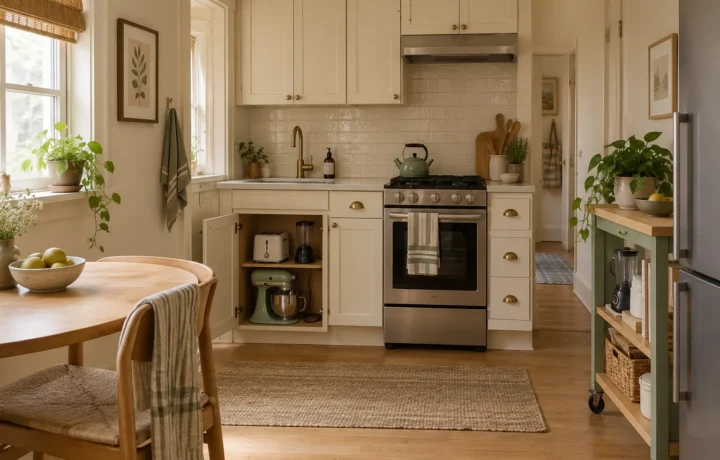
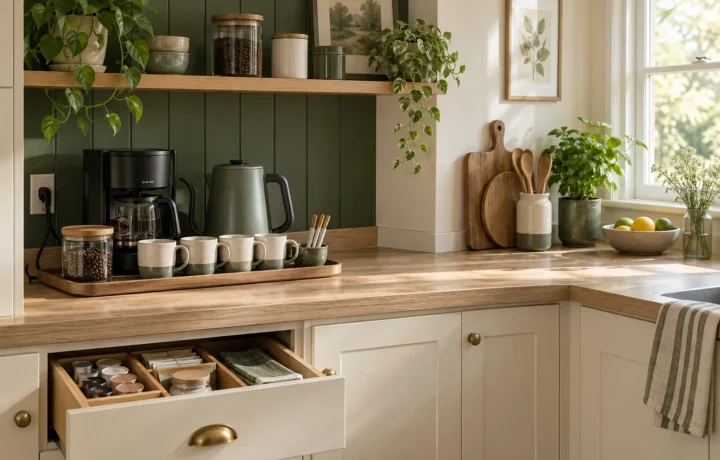
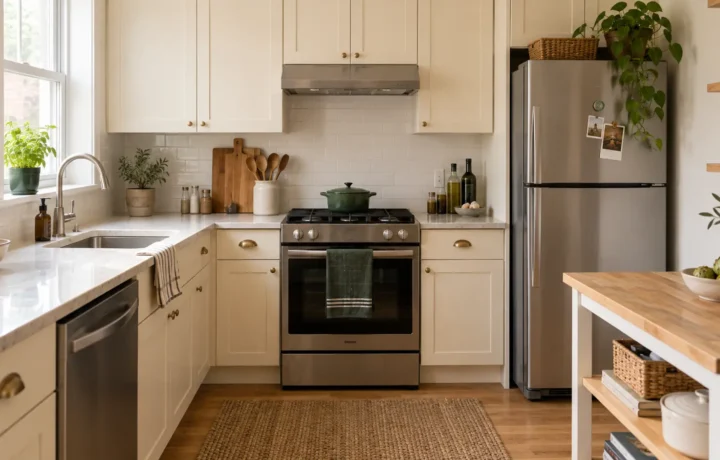
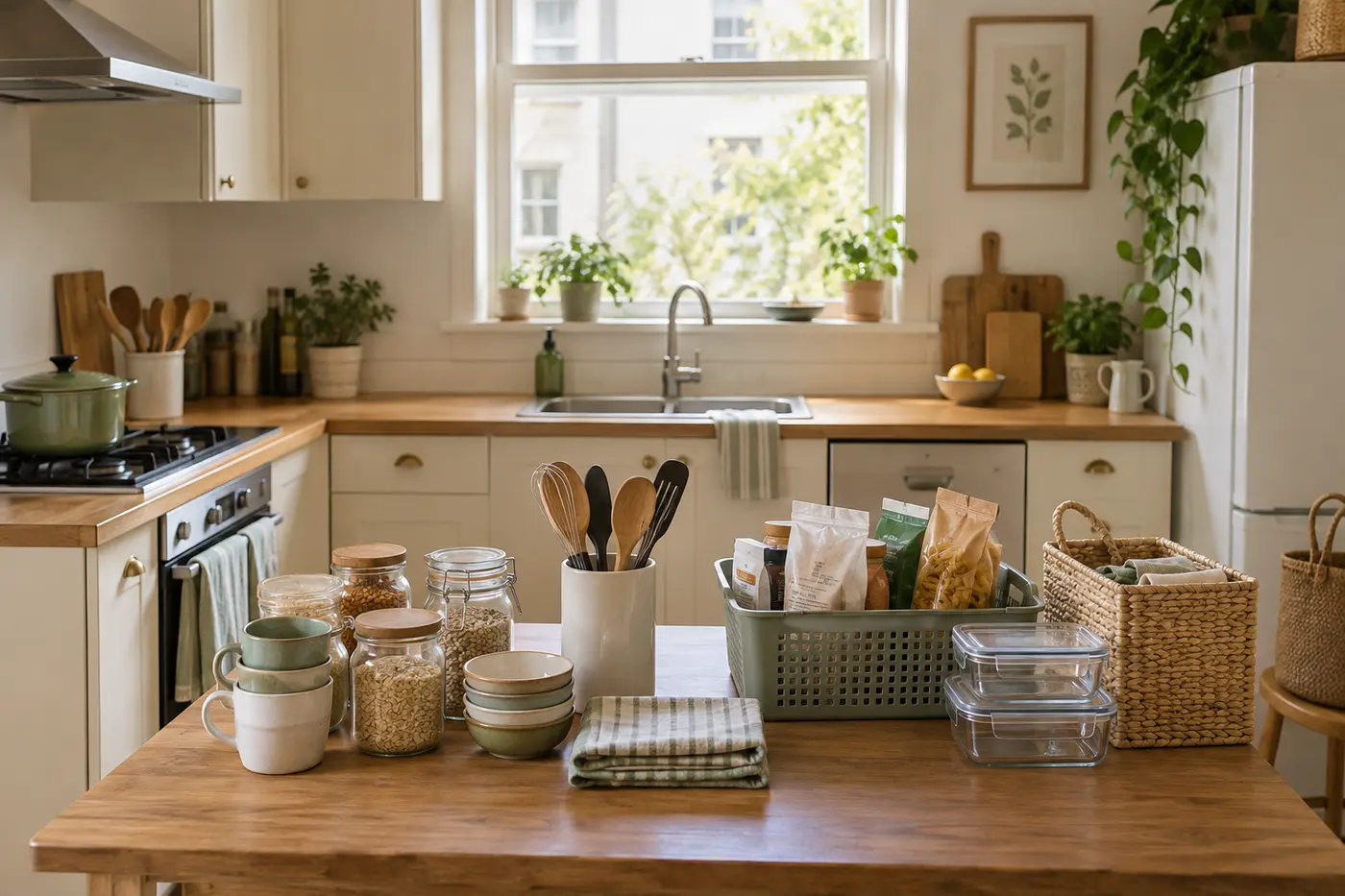
Editorial image note: the photographs in this guide are purpose-created illustrations of the organizing principles described. They are not presented as the author’s home, a client project or proof of a tested result.
In this guide
- 1. Set a boundary before you begin
- 2. Clear one working counter
- 3. Use decisions that match real life
- 4. Edit drawers before buying dividers
- 5. Check food by category, not package
- 6. Match food containers with their lids
- 7. Treat the under-sink cabinet as a service zone
- 8. Relocate rarely used items deliberately
- 9. Finish with a five-minute reset
- Frequently asked questions
1. Set a boundary before you begin
Choose one drawer, one shelf or one stretch of counter. The boundary should be small enough to finish before the next meal. Keep three destinations nearby: items that stay in this zone, items that belong somewhere else and items that can leave the home.
- Keep the sink and main work surface clear.
- Use a tray or basket for items that must move to another room.
- Use one bag or box for donations and recycling.
- Stop when the chosen boundary is complete.
A useful rule
Do not open a second zone until the first one is functional again. Completion creates momentum; half-sorted rooms create fatigue.
2. Clear one working counter
Start with the surface that affects daily cooking most. Return appliances only when they are used often enough to earn permanent counter space. Put papers, medicines, keys and unrelated household items into the move basket instead of trying to organize them inside the kitchen.
Aim for one uninterrupted preparation area rather than an entirely empty room. A coffee maker or kettle can stay if it supports a real routine; three rarely used appliances usually cannot.
3. Use decisions that match real life
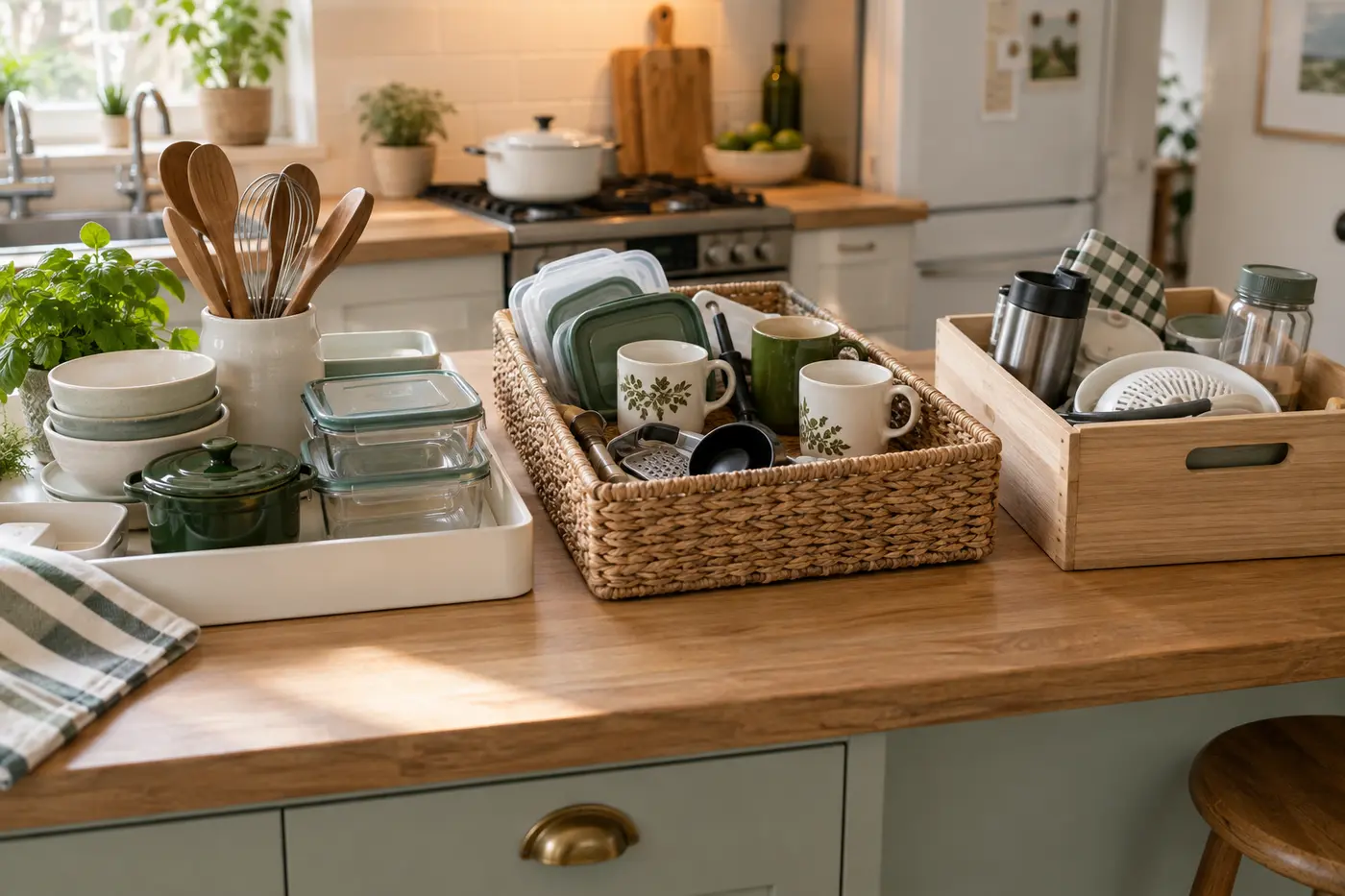
The question is not whether an object is good. Ask whether it is useful in this kitchen, in this season and in the quantity you own. Keep the best version of a duplicate first. Then decide whether a backup solves a real problem or only consumes convenient space.
- Used weekly: keep near the point of use.
- Used monthly: move to a less convenient shelf.
- Used seasonally: store outside the prime work zone when possible.
- Broken, incomplete or consistently avoided: repair promptly or let it go.
4. Edit drawers before buying dividers
A divider cannot solve an overloaded drawer. Remove obvious duplicates and tools that do not fit the drawer’s job. Keep everyday cutlery together, cooking tools near the stove and preparation tools near the main work surface. Our focused guide to organizing kitchen drawers explains how to size zones after the edit.
Leave enough free movement for the drawer to open without catching. A small amount of visible space is useful capacity, not wasted capacity.
5. Check food by category, not package
Group the same kinds of food together so duplicates become visible. Check dates and packaging condition, then place the food you will use first at the front. Avoid decanting everything simply for appearance; original packaging often carries preparation, allergen and date information that still matters.
If the kitchen has no pantry, use the same method on one cabinet at a time and see our guide to organizing a small kitchen without a pantry.
6. Match food containers with their lids
Pair every container with a usable lid. Recycle or repurpose unmatched pieces only where local rules and material condition allow. Keep a small, deliberate set of shapes that stack together; too many incompatible systems make the cabinet feel full even when the total number is modest.
For the full sorting and storage method, use our guide to organizing food-storage containers.
7. Treat the under-sink cabinet as a service zone
Remove empty bottles, old sponges and supplies that belong elsewhere. Keep plumbing and shutoff valves visible and reachable. Store products upright in removable caddies, follow every product label and keep household chemicals secured according to the needs of your home.
The dedicated under-kitchen-sink organization guide covers measurements, leak checks and renter-friendly storage.
8. Relocate rarely used items deliberately
A serving platter used twice a year does not need the same access as a saucepan used every evening. Move occasional pieces to a high shelf, dining-area cabinet or clearly labelled household storage location. Do not move an item without assigning a destination; the move basket should be emptied before the session ends.
9. Finish with a five-minute reset
Return the keepers, remove donations and recycling, and wipe only the area you opened. Note any storage product you genuinely need, including exact internal measurements. Waiting until after the edit prevents buying organizers for items that no longer belong.
- Daily: return counters to their working state.
- Weekly: empty the relocation basket.
- Monthly: check one high-friction drawer or shelf.
- Seasonally: review rarely used appliances and serving pieces.
Frequently asked questions
Where should I start when decluttering a kitchen?
Start with one visible work surface or one small drawer. Choose a boundary you can completely reset before the room needs to be used again.
Should I buy organizers before decluttering?
Usually no. Edit the contents first, measure the remaining items and the internal space, and buy only when a product solves a specific access problem.
How do I declutter without throwing useful things away?
Use a relocation or trial box for uncertain items, add a review date and keep safety- or health-critical items accessible. The goal is better placement and deliberate quantities, not maximum disposal.
How often should a kitchen be decluttered?
A short monthly check of one problem zone is often easier than a large annual clear-out. Food and frequently changing household supplies may need more regular review.