- Best for
- Small rental kitchens
- Approach
- Freestanding storage
- Start here
- Measure your space
1. Measure before you buy
Take a few minutes to measure the space you are working with, including width, depth and height. Open nearby doors and drawers fully. Check that any storage you add leaves room for appliance doors, handles and your normal route through the kitchen.
Write down the usable inside dimensions of a cabinet, rather than the outside size. Shelves, hinges and plumbing can reduce the room available. Match these measurements to the product specifications before ordering.
Measure usable depth separately. Check door and appliance clearance.
2. Give everyday food a home
Group ingredients by how you use them: breakfast supplies, baking ingredients, snacks and everyday cooking. Keep the items you reach for most often in the easiest-to-access location. Reserve less convenient shelves for occasional supplies.
You do not need to transfer everything into matching jars. Keep food in its original packaging when that makes dates, ingredients and instructions easier to check. If you decant it, retain the label information and avoid mixing old and new stock.
3. Choose storage that fits
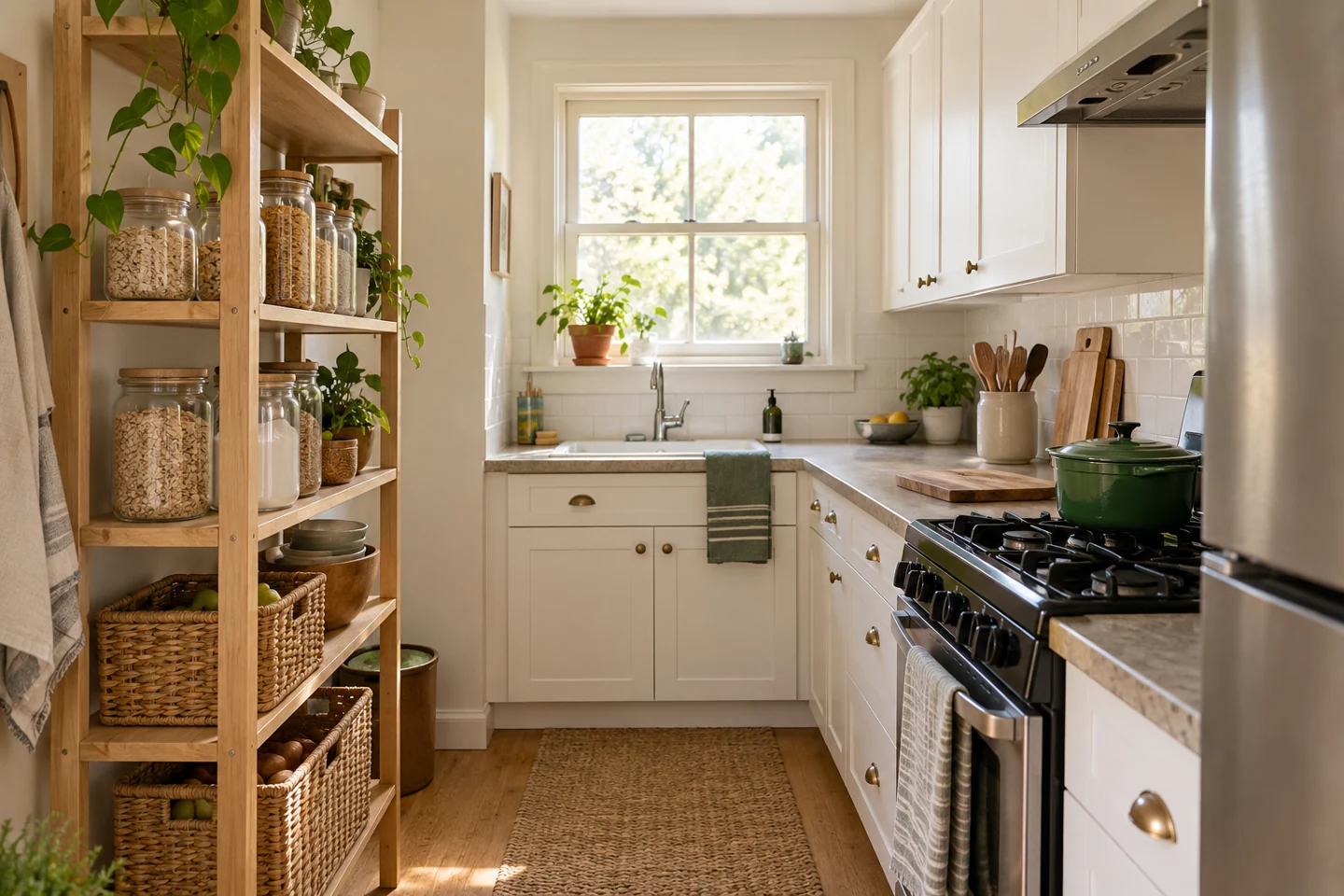
There is no single solution for every kitchen. Compare a few simple options against your measurements and what you already own.
| Option | Useful for | Check first |
|---|---|---|
| Freestanding shelf | Extra pantry space | Floor space, stability and door clearance |
| Stackable bins | Grouping packets | Shelf height and access to the lower bin |
| Turntable | Small jars | Cabinet depth and edge clearance |
Before you buy
Check dimensions, load limits, stability and your rental agreement. Follow furniture anchoring instructions; freestanding does not automatically mean safe without anchoring.
4. Keep the system easy to reset
A simple system is easier to maintain, especially in a busy week. Build in a little flexibility so you can adjust as your needs change.
- Keep labels simple. Use short, clear names so it is easy to find and put back items.
- Leave room for new groceries. Avoid filling every container and shelf to its limit.
- Review what you already have. Check dates and duplicates before your next shop.
Start with one shelf and use it for a week before buying more containers. A layout that suits your everyday habits is more useful than one that only looks tidy in a photograph.